Incest – The Surprising Thomistic Objections

Eamonn Clark

*WARNING: Put on your Charity Goggles*

A disappointing article appeared recently in the Chicago Sun-Times entitled, “Archbishop not backing gay marriage – yet.” (See Phil Lawler’s commentary here.)

While one might argue there are several problems in the article, I want to focus on His Eminence’s explanation of consanguinity in marriage. I think he is off-base and risks coming across as a consequentialist.

The Angelic Doctor lists four reasons why consanguine marriage is illicit – and guess what? The risk of birth defects is not one of them. To me, it seems unlikely that Thomas was altogether ignorant of the likelihood of sickly kids coming from kissing cousins, but suppose he was… He is still against it, and with today’s rapid advances in genetic manipulation, the “problem” of incestuous birth defects could eventually be overcome. We should see the causal link between incest and sickness as a sign that something is wrong with the act, not as a random feature of an otherwise virtuous behavior. Thomas gives us a more principled account of why consanguinity (and affinity) is such a big deal.

With that, the four reasons are:

  1. Shame (in its proper sense) before one’s parents – and those closely united with them by blood and law – is good on account of the special respect owed to them on account of one’s special relationship with them.
  2. Families often live together, and this would provide an untold number of occasions to lust if there were not a clear, strong, and constant prohibition against incest.
  3. Inter-family marriage increases the social good of individual human beings, and in so doing it also builds up the community.
  4. We already have a natural inclination to love family members, and if this had the possibility of intercourse added to it then there would be an occasion for too great a sexual desire for that person.

So, for St. Thomas, it is about filial piety, intemperance in itself, and the good of the commonwealth, not scoliosis or clubfoot.

Again, it is not that birth defects are irrelevant to the discussion, but it is a symptom of the problem rather than the problem itself – and it is a symptom which theoretically could be eliminated. If we are to win the battle of the minds against secular culture, then we need to do better. Going back to Thomas is almost always a good idea, and I suggest that this is one of those moments. Incest is one of the last sins against chastity that Western society actually considers immoral… Let’s be sure not to lose that ground.

St. John the Baptist – pray for us.

Reflections of a New Priest

Fr. Peter Gruber

Before I was ordained, I was asked what I looked forward to most about being a priest. My answer happened to be the same thing that filled me with the greatest uncertainty: hearing confessions.

Everything else about being a priest seemed somehow already familiar – daily Mass had made me accustomed to the priest’s role, diaconate ordination acclimated me to preaching, I had already adjusted to our primary ministry to the students at our universities.

However, hearing confessions was an entirely new experience. Sure, I had grown used to being on the penitent side of the screen, but the idea of encountering other people in what seems their most personal details had given me pause. Would I have anything to offer?

But upon being ordained, I quickly found hearing confessions the most impactful and formative aspect of being a priest of Jesus Christ.

I’m a priest of the Oratory of St. Philip Neri and hearing confessions is a particularly Oratorian thing to do – St. Philip Neri did the bulk of his pastoral care within the sacrament of Penance. Even the time spent waiting for the next penitent has become a new facet of my spiritual life. More than any other time do I get to practice what Blessed John Henry Newman would call (in his Advent sermon of the same name) “watching.” I pray that I may have the same zeal as St. Philip, who would go throughout the streets of Rome to attract people to the confessional early in his priesthood, and later would “attract souls as a magnet draws iron.” To support such zeal, I all the more have to be rooted in intimacy with Christ in prayer, as St. Philip was.

In one of our confessionals, we have a small statue of St. Padre Pio. A few years ago, while I was still in college, I found Padre Pio’s Prayer after Communion, and since then, St. Pio has accompanied me through this prayer with every communion. And now, he accompanies me as a priest. I’m reminded when I see him there how his advice in the confessional was short but filled with insight, and I pray that I may have something of his depth or brevity in my counsel.

As a mediator of Christ, it is His mercy that I dispense. Behind that screen, at the intersection of God’s love and human misery, I have to make real the words of John the Baptist, “He must increase, I must decrease” (John 3:30). It’s His cross, His sacrifice, that I witness to, and I pray that I do not get in the way of his outpouring mercy.

More than anything, I have found that sins do not make us who we are. The priest does not see our deepest selves when he hears our confession; he sees our deepest selves when he gives us absolution. “We are not the sum of our faults,” St. John Paul II says, “we are the sum of the Father’s love for us.”

Sola Scriptura: 7 Fatal Flaws of a Bleak Doctrine

Eamonn Clark

“Sola Scriptura” means “only Scripture,” as in “Scripture alone is the authority for Christian doctrine.” It is one of the foundations of Protestant theology… It rejects the teaching authority of the Church as such. Given that this day marks the dreadfully unhappy 500th Anniversary of the beginning of Protestantism, shall we examine this idea and expose it?

I submit that there are at least 7 massive problems with Sola Scriptura.

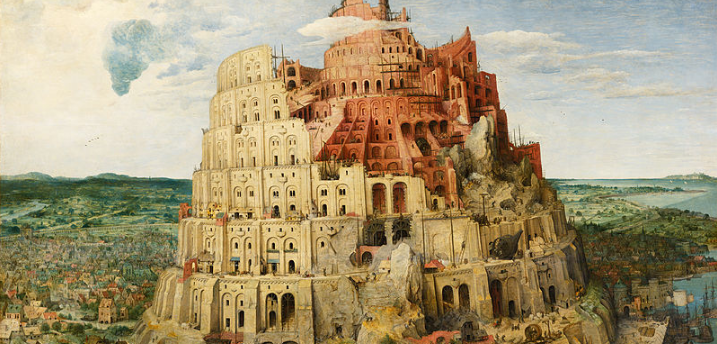
First: Sola Scriptura is anarchic. This is evident from the endless multiplication of divergent theologies and denominations within Protestantism. Without a unifying voice, namely, a bishop, pope, or something similar, one becomes his own definitive authority on the meaning of Scripture. Perhaps a pastor or teacher can help one form ideas, but it is I and I alone who am responsible for determining the true meaning of any given passage. Of course, I might say that the Holy Spirit is giving me the truth – which would mean that everyone must actually listen to me. In Protestantism, everyone is their own little pope. This same “bottom-up” approach to God existed once before, at the Tower of Babel. And there too did the languages multiply endlessly unto chaos, just as we see within Protestantism now, where there is splinter after splinter. Pentecost was the opposite – God came down to us (the Church as such, as represented by the Apostles and Mary in the Upper Room) and gave us a principle of unity from which to adapt to the many situations and needs of the day. Without a visible, living Pentecost among us, there can be no public unity around Christ. From the mere fact that there can be morally, liturgically, or doctrinally significant disagreement about the meaning of the same Biblical passage, it is evident that Scripture does not fit the bill of the “visible and living Pentecost”… Remember, the Devil knows Scripture too! (Mt. 4: 1-11) Unless one speaks about Scripture with the very authority of Christ, there is no end to disputation. As Peter says, interpreting Scripture can be very difficult and sometimes it ends badly, especially with Paul’s letters! (2 Pt. 3: 16) Would God really leave us orphans in this way? Did the Word really in practice just become more Words?

Second: Sola Scriptura is innovative. It did not exist until 500 years ago when Luther came up with it. Protestants often complain about “man-made traditions” infecting Christianity – well, Sola Scriptura is one of them. Would we not expect a Christian “God-made tradition” to have existed long before the 16th century? It sounds quite a bit like one of those “winds of doctrine” which Paul warned about (Eph. 4: 14). Of course, Scripture has been treated as authoritative throughout the ages, but it was not treated – or attempted to be treated – as the only authority until relatively recently. Did God let Sola Scriptura remain an obscure but correct practice and then even fall out of existence for centuries until Luther was inspired to revive it? This does not sound like the God of Christianity, does it… It sounds like a God Who did not remain among us but Who left us orphans instead – not only with no definitive interpreter of Scripture (see #1), but without the right doctrine about what Scripture is. And to think, He only left the children of Jacob in Egypt for 400 years…

Third: Sola Scriptura is historically impractical. This is not primarily due to illiteracy (though one might also wonder if that would be an impediment to being a good Protestant), it is due to the fact that for many years there simply was no such thing as Christian Scripture, let alone a collection of texts organized into “the Bible.” When Thomas the Apostle went to India, he did not bring with him the Gospel of Luke. When Peter went to Antioch, he did not bring Paul’s letters with him. When Matthew went to Alexandria, he did not bring the Johannine corpus with him. We can note that Paul in his missionary journeys, based on the whole Book of Acts and his own letters, is not using anything but Jewish Scripture in his disputations and preaching. How then could there be Christians in the wake of these evangelists? Doesn’t a Christian need a Bible? Obviously not. There were local churches set up in many places across the globe for a long time with little to no Christian Scriptures available, relying on the oral tradition and the authority of the Church as such, and it took even longer to form a real, authoritative canon (viz. “the Bible”) which allowed people to know what Scripture consisted of… Which brings us to the next problem.

Four: Sola Scriptura is conceptually impossible. We must know what actually is Scripture in order to use “Scripture alone,” yes? But how do we know what really counts and what doesn’t? The truth is that Scripture was defined by the Church, finally confirmed in a special way at the Council of Trent in response to the preaching and teaching of Luther, who wanted to throw out a few books which he didn’t think were really Scripture, but which most others did. Without descending into the minutiae of the history of the so-called “deuterocanon,” we can simply note that it was indeed widely regarded as Scripture from an early time, even though there was some controversy surrounding it. A Protestant response might be to fall back on the principle of St. Vincent of Lérins, that the faith is that “which has been believed everywhere, always, by all.” (Never mind that this was about faith in “the Catholic Church,” as Vincent says, nor that he only holds it out as a general rule for finding heresy rather than as a specific rule for formulating a biblical canon.) Universal acclamation of texts as Scriptural does not really work on its own… If there is a little disagreement, which there certainly was about non-deuterocanon, then one must begin to wonder, “How universal is universal enough?” There is no good answer. Instead, an authority must decide what is Scripture and what is not. Yes to 2 Peter, no to 1 Clement. Yes to Revelation, no to The Shepherd of Hermas. Etc. The New Testament itself does not and cannot provide a guide – nor does the New Testament provide a list of what belongs in the Old Testament. So the very existence of an authoritative canon which does not assemble itself or fall from the sky necessitates an authoritative compiler. That is the Church itself, which therefore must have its own special authority to speak for God. This guarantees the texts of Scripture are actually the ones which God inspired. (Let’s not even get into the bizarre and self-refuting theory that the Bible is a fallible collection of infallible texts…)

Five: Sola Scriptura is arbitrary. Of course, it makes sense that a revealed religion would involve a sacred text which has authority, but it is conceivable that it would not. And there is, therefore, no a priori need for “Scripture” as an authority at all, let alone as the sole authority. Let me be clear: I am not saying the Bible is not an authority, I am saying it is not clear that it automatically must be… And anyone who says that it is an authority has to appeal to something outside of Scripture. An appeal to Scripture to prove the authority of Scripture is perfectly circular. Why is Scripture an authority? Why not “Sola Papa” (the Pope Alone)? Why not “Sola Ego” (I Alone)? Why not “Sola Luther” (Luther Alone)? There must be an authority which supports Scripture as an authority, and that authority must derive from God. Seeing as Christ did not give us a biblical canon, He must have somehow given authority to mere human beings to decide what texts God actually inspired. In the end, men must cooperate in the governance of the Church, at least in this way. This brings us to problem #6…

Six: Sola Scriptura is self-contradictory. It is a teaching of Martin Luther, a mere man, and by those following him: also mere men. By obeying those who teach Sola Scriptura, the very doctrine is violated. To practice it on one’s own is also a violation, as one must listen to one’s own interpretation of passages (especially in cases of controversy), or one must say that the Holy Spirit is interpreting – Who is clearly not Scripture. And let us also note that Sola Scriptura is not taught by Scripture… So finally, we have the last and most problematic issue for the doctrine…

Seven: Sola Scriptura contradicts Scripture. The Bible does not teach Sola Scriptura, but it does teach the importance of the oral tradition which is not written down. Scripture also teaches the authority of the Church as such. Two verses will suffice. The first is 2 Thessalonians 2: 15 – “So then, brothers and sisters, stand firm and hold fast to the teachings we passed on to you, whether by word of mouth or by letter.” (Other translations render παραδόσεις “traditions” instead of “teachings.”) This is enough to show that at least Paul thought that more than Scripture might be necessary for safeguarding Christian doctrine. What might the mechanism be? He describes it in the second verse for our examination, 1 Timothy 3: 15 – “…if I am delayed, you will know how people ought to conduct themselves in God’s household, which is the church of the living God, the pillar and foundation of the truth.” How can “the church” be a “pillar” for the truth unless it functions as a means of connection to God, whereby false doctrines are corrected with good authority? The truth is tied at least to this pillar, “the church.” And how can it also be the “foundation” for truth unless it has a special means of holding up truth in a special way? What else could be the foundation of truth except that which is first in announcing it in the world? The guarantee of truth – infallibility – rests upon “the church.” God corrects error and announces truth through “the church.” This is how the Catholic Church understands its role in condemning heresies and defining doctrines (including what is Scripture and what is not).

There we have it… 7 fatal flaws with Sola Scriptura. Protestant readers (if there are any) might object with many verses of Scripture (especially 2 Timothy 3: 16, which simply insists that Scripture is indeed important – I do not deny this!)… However, in so doing they will no doubt demonstrate the points above.

You might consider sharing this post with any Protestant friends and see what they say. Tell them that no, God did not abandon us, leaving only a special book behind… That is a bleak doctrine indeed.

UPDATE (April 5, 2021): This post has become very popular, read many times every day – if you are reading, let me know how you found it! I always love to hear.

Main image: “The Tower of Babel,” Pieter Bruegel the Elder, 1563

Four Kinds of Problems with the Pan-Amazon Proposal on Married Priests

Eamonn Clark

The suggestion has been floated around in some quarters that at the newly announced Pan-Amazon Synod, to happen in 2019, bishops will discuss the possibility of ordaining married men in their region to the order of Priest. These “viri probati,” “proven men,” would make up for the absolute dearth of priests deep in the jungles of South America, where people are often deprived of the sacraments for long periods of time. There have been some missionary efforts there, but the terrain is vast and unfriendly, and the culture is extremely difficult to adapt to, so there has been limited success. It seems to some that simply ordaining certain men in isolated communities would help to make up for the absence of celibate priests in the area.

I note at least 4 categories of problems with the proposed solution. They are as follows:

  1. Canonical. The Code of Canon law, which binds the Latin Church (including, presumably, the men who might be ordained in the Amazon,) does allow for the possibility of married priests under certain circumstances (see c. 1047, §2, n. 3), but nowhere is the obligation to perfect and perpetual continence lifted for any cleric in the Code (though entering Orders – even the diaconate – without understanding or making the promise of continence means one cannot be obliged to its fulfillment). There has been much misunderstanding of the obligation to continence as distinct from the obligation of celibacy, and the widespread priestly ordination of married men in the Latin Church would make this worse. (On the other hand, it might finally get the mess canonically resolved.) For more on this confusing topic, see Dr. Ed Peter’s fine treatment here.
  2. Standard objections. There are many intrinsic problems with the idea of a married presbyterate. There are the economic problems, such as the time and energy a father and husband would have to spend between his family and the service of the community – or several communities, sometimes perhaps separated by miles of thick jungle, in this case. The resources needed to educate and train these priests adequately is an additional economic strain (and would likely never rise to the level of a normal priestly education), as is the payment of the priest who has to make enough income to provide for his family. There is the loss of the power of the witness of celibacy, which is a sign of contradiction to the spirit of the world, reminding people that there is a Heaven and a Hell, a death and a judgment, and that we had better start thinking about these things now if we are to be prepared for them later. There is also the impoverishment of the spirituality of the Latin priesthood as normally understood, which is spousal in nature and urges the priest toward greater charity for those in his care. In general, it seems that all the normal problems of a married priesthood obtain.
  3. Internal prudential. Not only will there likely be no comparison between the education and training of the Amazonian viri probati and a regular Latin priest, to the possibly very grave positive harm of the community (due to serious deficiencies in the confessional, in the pulpit, and so on), but the deeper problem causing the shortage is ignored. It is like a man who drinks to cure his depression – the feeling will go away for a while, but the underlying cause is never addressed. In the meantime, an addiction is developed which harms him positively and perpetuates the deeper problem, perhaps even worsening it. If there are no normal vocations to the priesthood, it is due to a lack of faith, a lack of zeal, a lack of something important in the local church. This ought to be the real object of discussion.
  4. External prudential. Once the Amazon has viri probati priests, who else will feel entitled? What other areas or countries will claim that they need this compromise? Meanwhile, as more concessions are made due to mounting pressure, the three foregoing sets of problems will perpetuate themselves.

The idea of a “simplex priest” may be what the bishops have in mind, a priest who does not do all of the public actions a priest with full faculties to preach and hear confessions would… But that comes with other problems, which will be addressed in a future post.

In summary, the bishops meeting at the Pan-Amazon Synod ought to think these things through quite carefully. I, for one, am unconvinced that it is a wise idea. But then again, I’ve only ever been to Amazon.com…

Sancti Obscuri – St. Crispin and St. Crispinian (October 25)

Jacob Gruber

In Shakespeare’s “Henry V”, King Henry overhears a soldier lamenting how few men have come from England to fight in a battle against the French at the Battle of Agincourt, leaving their odds of carrying home a win rather low. He responds with a bold appeal to all the courage left in the hearts of that “band of brothers” who did show up for battle and unites the hope of their victory with the celebration for all time of St. Crispin and Crispianus (Crispinian). It’s worth the watch:

Fictional though this speech may be, the king’s prediction seems to have unfortunately come true: “and Crispin Crispian shall ne’er go by from this day to the ending of the world but we in it shall be remembered!” In this article, it is my hope that on the feast of Crispin and Crispinian this year (October 25), Crispin and Crispinian themselves will be remembered for once!

These two saints lived the in middle of the third century in the Roman empire. Allegedly, they were brothers from a noble Roman family. The story from the Bollandists (from which the Catholic Encyclopedia draws their information in the case of these men) tells us that they went to Soissons in Gaul together to preach the faith. While there, they supported themselves financially primarily by making shoes. Their missionary work there was so effective, however, that it caught the attention of the high Roman authorities. A short historical detour is necessary at this point.

Crispin and Crispinian lived in the time of the Roman Emperor Diocletian. Any Christian familiar with some Roman history should be feeling the shiver run down their spine – this man was ruthless. He was Roman emperor from 284 to 305 AD, and in his rule he initiated one of the biggest, cruelest persecutions in early Church history (which is no small statement when the bloodbaths of Emperors Nero and Decius are taken into account). So bad was Diocletian’s persecution that, before Anno Domini (AD) came into fashion for marking years, the Christians (especially of the Alexandrian Church) used Anno Martyrum (AM), or the Era of the Martyrs, to mark their years. The Anno Martyrum system began year 1 in 284 AD – the beginning point of Diocletian’s reign and persecution.

With this in mind, consider that Crispin and Crispinian were preaching the Christian faith rather effectively at this time in Gaul, an important territory of the Roman empire. It did not take long at all for some action to happen. In the year 285 AD (or the year 2 in the Anno Martyrum), Maximianus Herculius, who had been made a sort of co-emperor with Diocletian, called the two men before him. After his efforts to persuade them to give up the faith, they responded,

“Thy threats do not terrify us, for Christ is our life, and death is our gain. Thy rank and possessions are nought to us, for we have long before this sacrificed the like for the sake of Christ and rejoice in what we have done. If thou shouldst acknowledge and love Christ thou wouldst give not only all the treasures of this life, but even the glory of thy crown itself in order through the exercise of compassion to win eternal life.”

Maximianus handed them over to Rictiovarus, the Gallic governor, who had them tortured terribly – stretched on a rack and flesh torn, among other horrible inflictions. After all of this, he had millstones fastened to their necks and had them thrown into the Aisne River. Miraculously, they managed to swim to safety. The Roman Martyrology succinctly finishes the story: “after [these] horrible torments, they were put to the sword, and thus obtained the crown of martyrdom.”

The Catholic Encyclopedia questions some of the credibility of this story, since its sources may be somewhat unreliable. However, we must examine a certain important principle in the matter of saintly stories, since credibility will always loom as an issue in the stories of the obscure saints. I simply quote a section from St. Francis de Sales’ Treatise on the Love of God in which he defends the practice of believing holy stories:

“Charity willingly believeth all things; that is, it is not so quick to believe that any one is lying, and if there are no apparent marks of falsehood in things which are told, it makes no difficulty about believing them; but above all when they are things which exalt and magnify the love of God towards men, or the love of men towards God … in matter of religion, good souls have more sweetness in believing things in which there is more difficulty and admiration.” (Chapter XII)

By means of this argumentation, St. Francis de Sales was insisting that a certain miraculous story told in a homily by St. Bernard could be believed, even though he simply had no evidence whatsoever to prove it. We are in a similar situation. We’ve been handed a story of the miracles and martyrdoms of Crispin and Crispinian with only the written testimony of writers centuries later to show for it. But the good souls have more sweetness to believe stories such as these. Our charity willingly believes all of these things.

Thus,  I would suppose that we can accept the story handed onto us from the works of the Bollandists – but I’ll leave that up to the reader.

So, what if Crispin and Crispinian hadn’t fallen into obscurity? They are already known as patron saints of shoemakers, saddlers, and tanners. But their legacy is more than cobbling. While the modern imagination tends towards Shakespeare’s reference in “Henry V,” it turns out that this reference is not so far from the original spirit of these men. The Battle of Agincourt was a battle in which England triumphed against great odds over France in 1415 AD. But Saints Crispin and Crispinian in their own way triumphed against great odds in France (Gaul at their time), albeit in a spiritual battle for souls.

So let us hail them today as victors all the same! May St. Crispin and St. Crispinian pray for us!

Masses of Reparation for the Protestant Rebellion

Eamonn Clark

I have a request of the priests reading this blog. This October 31st and beyond, celebrate Masses with the intention of making amends for 500 years of doctrinal and moral chaos. Offer a Mass for Christian unity, perhaps even specifically for the conversion or downfall of all those voices which draw people away from the one true Faith and into the errors of Luther, Calvin, Zwingli, and beyond.

Our Lord wants such reparation and prayer. I know this because of the High Priestly Prayer (John 17: 1-26)… We should lament intensely the countless souls lost to the nonchalance and non-sacramentality of Protestantism. They are sheep who shepherd themselves, and thus, as we have seen now for five centuries, the errors multiply themselves, as if it were still the days of the Judges.

This anniversary is nothing to celebrate. It is one of the worst moments in the life of the Church. In fact, Our Lord was so concerned that not only did He inspire the Council of Trent, but He even sent Our Lady to the Americas, as if to make up for the numbers being lost in Europe. We should imitate such concern for Christian unity.

While the laity can (and should) pray and fast in reparation, the priest is in a special position to make such intercession. The sacrifice of Calvary perpetuated in the spirit of making amends for 500 years of heresy and spiritual malpractice is surely very pleasing to God… What graces might be occasioned by such a devotion, both for Christian unity, for conversion, and for the ministry of the priest himself? There is only one way to find out.

Perhaps there has been no better moment to offer such Masses than this coming anniversary. Do not let it pass by!

Note: CRM will be hosting a series of articles this year on the Reformation and Protestantism. Be sure to stop by or subscribe!

Capital Punishment and the Development of Doctrine

Eamonn Clark

Update: Dr. Feser presents a very similar argument here.

Currently, I am reading Dr. Ed Feser‘s recent book, By Man Shall His Blood Be Shed: A Catholic Defense of Capital Punishment (co-authored by Joseph Bessette). It was with great interest then that I read the Holy Father’s remarks on October 11 regarding the death penalty in a conference celebrating the 25th anniversary of the publication of the Catechism of the Catholic Church.

I do not wish to summarize the entire history of this topic within Catholic and Western thought, as any curious reader would profit much more by simply picking up Dr. Feser’s book, but instead, I want to address (briefly) the possibility of a “development of doctrine” which would say that capital punishment is intrinsically evil.

But first, let’s look at what the Holy Father actually said.

“[The death penalty] is in itself contrary to the Gospel.”

“However serious the crime committed may have been, the death penalty is inadmissible because it undermines the inviolability and dignity of the person.”

“We are not in the presence of some contradiction with the teaching of the past, because the defense of the dignity of human life from the first moment of conception until natural death has always been found in the teaching of the Church.”

“The harmonious development of doctrine, however, requires that we [now] leave out arguments which now appear decisively contrary to the new understanding of Christian truth.”

“Unfortunately, this extreme and inhumane remedy was also used in the Pontifical State, neglecting the primacy of mercy over justice. We assume responsibility for the past, and we recognize that those means were guided by a mentality more legalistic than Christian.”

This is a startling series of quotations, for several reasons.

First, the Holy Father, probably without realizing it, is accusing many of his real predecessors of using an “extreme and inhumane remedy,” thus “neglecting the primacy of mercy over justice,” which implies they “were guided by a mentality more legalistic than Christian.” This would, of course, include some popes who have been raised to the altars, even men such as the great St. Pius V. It is unlikely that the Holy Father really meant to condemn several saintly popes as impenitent murderers (or as hopelessly bad moralists suffering from invincible ignorance of their material sins), but that is the implication nonetheless.

Second, the Holy Father’s comments display a startling lack of awareness of the rehabilitative power of capital punishment. In fact, this is one of the traditional arguments put forth in favor of the death penalty: to know that one is about to die in a short while is a great help in coming to repentance. What else could focus a man’s mind more on the good of his soul? If imminent and certain death does not bring about repentance, we can be pretty sure that nothing will. Furthermore, while such criminals are locked up, how many more people might they kill, heaping even more sin onto their souls? For an example of the power the certainty of death has for occasioning conversion, one might look to the ministry of St. Joseph Cafasso, who turned several dozen men from hardened criminals petrified of death into virtuous souls equally resigned to live or die, sometimes hours before they were to be hanged… (St. Catherine of Siena and St. Vincent Palotti are other examples.) It was, in fact, the certain imminence of their deaths that softened them for the work of their chaplain-saint. Surely, they would have done much good in the world had they been set free, but then again, if such were done then there would no longer be a real threat of certain death in these cases (rendering the rehabilitation less likely), nor is this how justice works… It is unsuitable as a jurisprudential norm to allow men to walk free without facing their sentence simply because they appear to have become reformed (unless reform is conditionally a part of their sentence). Instead, converted inmates will make great citizens of the Kingdom which is not of this world – lest we forget, doing well in this life is not the ultimate point, as earthly life is not the greatest good. Human life is not entirely destroyed by bodily death. This must not be an afterthought in the discussion of capital punishment, as it is precisely the supernatural call to Beatitude which gives human life so much dignity even beyond our merely natural goodness as creatures.

Third, and most importantly, the Church has taught perennially, building upon the teaching of the Old Testament (in God’s own legislation) and the New Testament, and upon the timeless understanding of natural law that there is no injustice in a legitimate government administering capital punishment under certain circumstances, namely, the crime must really be proportionate with the penalty of death, and there is moral certitude (following due process) that this individual really committed such a crime. (We might also add other factors, such as avoiding doing more harm than good, or having suitable means of execution, but this will suffice for an exploration for now.) However, apparently, we now have “a new understanding of Christian truth” which can allow a development of doctrine that completely relegates capital punishment to the realm of intrinsic evils.

I suggest that this is absolutely impossible.

First of all, such a change would be abrupt. This is not how authentic developments occur, at least outside the context of an ecumenical council where a whole number of matters might be settled with uncharacteristic promptness. Rather, they naturally unfold over a long period of time. One might argue that the past two pontificates somewhat softened the attitude toward capital punishment, which is true, but 35 years is an unimpressive tenure for a doctrinal shift. A counterexample might be the teaching on lending at interest, which changed as slowly as its object changed (viz. the instrumental scope of currency). Another might be the Immaculate Conception, celebrated in the Church for centuries before slowly making its way into the universities for debate and finally, after several more centuries, onto the loggia of Bl. Pope Pius IX. More examples could be provided, especially in the field of bioethics. What makes an abupt change to be such a red flag is that the Church does not suddenly come up with ideas about doctrine; rather, the doctrine is there from the beginning and it is slowly unpacked by the faithful. This takes a long time.

With that, the second problem with this change would be that it finds no meaningful support in the Catholic moral tradition. As attentive readers of Prof. Feser’s book will see, the opposite is true – the Church teaches and has always taught that the death penalty is legitimate in principle because of its proportionality to certain crimes, among other reasons. This is especially true for St. Thomas, upon whose arguments much of the modern defense rests. What recent popes have done is little more than advise a restricted use of it, in keeping with their own prudential judgments about its efficacy and usefulness within a broader social context (and Cdl. Ratzinger reminded us that one may disagree with popes on this point). One might point out that the paragraphs in the Catechism which discuss the death penalty seem to insist on its use only when necessary for protecting others; while this is what the document says, (especially when it quotes Evangelium Vitae,) it does not discuss why on the level of principles of justice, only on the level of prudential judgments about “the common good” and how to be “more in conformity with the dignity of the human person” – presumably, only the person of the criminal… The dignity of the person or persons killed is not discussed, and such a counterweight must be included in such an examination of distributing proportionate punishment, as the CCC says in the paragraph immediately preceding. (See also the Roman Catechism on this point, issued by Pope St. Pius V and re-issued by Pope St. Pius X.) Also, for what it’s worth, John Paul II beatified a certain Pope Pius IX. Certainly, the former knew of the latter’s firm support and use of capital punishment…  We ought to conclude then, in keeping with the hermeneutic of continuity, that John Paul II meant only to advise such a use of capital punishment in accord with the teaching which preceded it – that capital punishment may be warranted even without the need for protecting others (which is not strictly denied by the CCC) – and thus it is only a prudential judgment about its use, rather than a denial of the justice of its use in circumstances which do not necessitate its use for the protection of others, that we find in EV and the CCC. (We should also remember that catechisms, while certainly important, are not infallible documents, as Cdl. Ratzinger himself pointed out after the CCC’s publication!)

The third and most important item to discuss is the obvious one: such a change would actually constitute a reversal of past teaching, despite the Holy Father’s words that this is untrue. The Church has certainly grown in its understanding of human dignity in various ways throughout the ages, but there can be no realization about human dignity that would render capital punishment illicit. This would theoretically be possible if the Church had never actually formulated a teaching in favor of capital punishment, instead merely tolerating its use without meaningful comment. But since this is not the case, there can be no such change. Some people might be confused by this… Let’s consider another example. Suppose Pope Benedict XVII in the year 2078 decides, “The Church has evolved in Her understanding of the dignity and power of Baptism to the point where we realize that there is really no need for Confession.” One might very easily map the words of Pope Francis onto the same idea of this fictional Benedict XVII – mercy, legalism, development, apology, etc. Since this is a development of the doctrine on Baptism, how could it contradict anything but past doctrines on Baptism? The reason is very simple: doctrines do not live in bubbles. They must fit together with all other authentic doctrines. If a new doctrine on Baptism implies a contradiction of the doctrine on Confession, then the new doctrine on Baptism is wrong. If a new doctrine on human dignity implies a contradiction of the doctrine on capital punishment, then the new doctrine on human dignity is wrong. We do have a doctrine on capital punishment, as Dr. Feser shows brilliantly in his book, and the attempt to raise human dignity to such a point as it becomes absolutely inviolable would indeed imply a contradiction of that doctrine and thus would be erroneous. It would also imply that God legislated immorality in the Old Testament (ex. Leviticus 20:10) and that St. Paul confirmed immorality in the New Testament (Romans 13:4).

It will be very interesting to see how all this unfolds, or if anything even happens at all.

It is perhaps more important than ever to be training dogmaticians and moralists… Let’s pray and fast, too.

Stay tuned… and be sure to subscribe!

Our Lady of Fatima, pray for us!

Main image: Portait of Pius V, pope; El Greco, c. 1600-1610 (oil on canvas)

Waiting in the Wings

Eamonn Clark

I thought it might be nice to share some of what CRM’s itinerary is for the next year. Here are several items we have on deck (in no particular order):

Is Internet Piracy Stealing?

The New Albigensianism: Parts IV & V

Reflections of a New Priest

Limbo: A Sensible and Comforting Doctrine

Some New Solutions to the Abiathar Problem

What Heaven is Not

Moses: The Key to Revealed Religion

The Men Caught in Adultery

A series on the Reformation (500 years)

Why the Ascension Makes Sense

What is a Spiritual Communion?

Probabilism, Probabiliorism, and Equiprobabilism: What’s a Conscience to Do?

…And More!

Stay tuned, hit that subscribe button, and be sure to share.


Will the Real St. Matthew Please Stand Up?

Fr. Peter Gruber

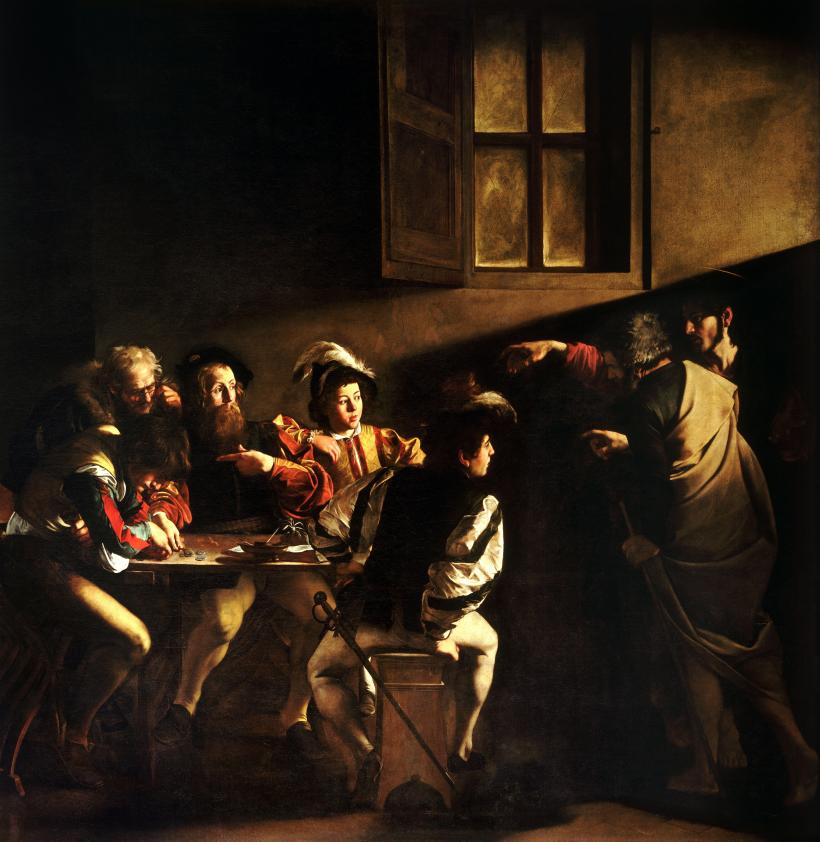
“That finger of Jesus, pointing at Matthew. That’s me. I feel like him. Like Matthew.” Pope Francis remarked in his 2013 interview with Fr. Antonio Spadaro, S.J.

“It is the gesture of Matthew that strikes me: he holds on to his money as if to say, ‘No, not me! No, this money is mine.’ Here, this is me, a sinner on whom the Lord has turned his gaze. And this is what I said when they asked me if I would accept my election as pontiff.”

In Caravaggio’s The Calling of St. Matthew, Pope Francis found the perfect image to express his own surprise at being uniquely called by Christ to serve the Church as supreme pontiff.

But, we have a problem. Which figure in the painting is St. Matthew?

(If you haven’t already done so, take a moment to give the painting a good look and try to figure it out for yourself.)

Besides the faintest loop over Christ’s head, there are no halos in this painting. Nor should there be – St. Matthew was only Matthew the tax-collector at this point. Here he is, in the midst of his sin and in corrupt company. Matthew has just as much chance of being called out of this situation as any of the five guys in the tax office.

But which one is he?


Option 1: The Bearded Man

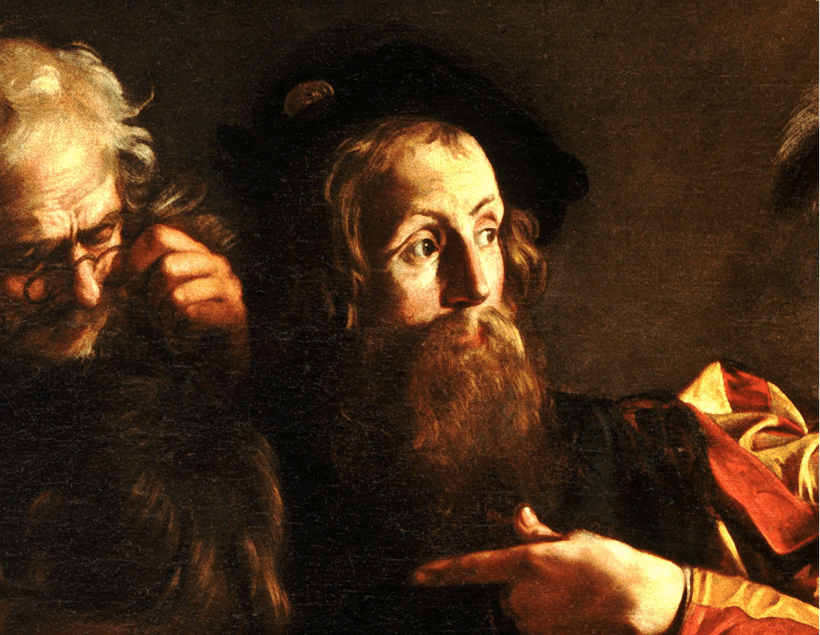
At first glance, Matthew appears to be the man with long beard. His eyes show surprise, his face is illuminated, his finger seems to point toward his breast. And, maybe just to help us out, he has a distinguishing coin in his hat and a right hand fingering money on the table. If there is anyone in this painting who is reacting as the one who is called, it’s this guy.

bearded-guy

There are two other reasons why the bearded man is the best candidate for Matthew.

First, Caravaggio did not paint The Calling by itself. With this painting in the Contarelli Chapel in the San Luigi dei Francesi Church in Rome, Caravaggio painted two other scenes from the life of St. Matthew: The Inspiration of St. Matthew and The Martyrdom of St. MatthewIn both of these adjacent paintings, Matthew is depicted as a man with a sizable beard.

The second reason concerns some of the interesting history going on at that point. Before this was painted, there was a passing fear that France might go the way of the Church of England. This fear partially subsided when the Huguenot (Protestant) Henry IV converted back to Catholicism upon taking the French throne in 1593. Caravaggio was commissioned six years later to paint three works for the church of San Luigi dei Francesi (St. Louis of the French). To flatter the now-Catholic king of France (and appease his patron), Caravaggio painted St. Matthew to resemble Henry IV. (You can see the bearded resemblance here.)

But that might not be the whole story.


Option 2: The Hunched-Over Man

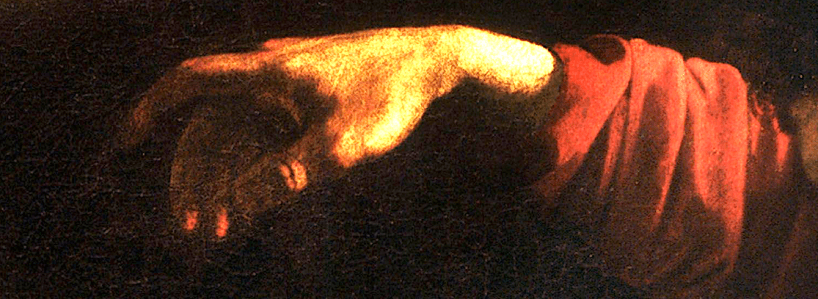
People make a big deal about Christ’s pointing gesture just below the window in the painting. His hand is unusually relaxed for a definitive signaling of direction. The reason for this is very likely that Caravaggio is alluding to a more famous painting: The Creation of Adam by Michelangelo.

finger-edited

fingers

Michelangelo’s Adam is depicted in the Sistine Chapel fresco in the moment just before his animation, with his finger less than an inch from that of God. Michelangelo, instead of showing an Adam already filled with life, depicts the precise moment prior to his ensoulment with all the drama of a limp wrist.

Like Michelangelo, Caravaggio may not be capturing the moment of the calling of Matthew; he might very well be capturing the precise moment before the calling of Matthew. The finger of Christ the New Adam has yet to be fully extended, the call is only just about to happen. The whole painting is in that dramatic tension of the moment before the call.

In that case, Matthew is not the bearded man whose face is fully illuminated; Matthew is the man whose face is about to be illuminated – the smooth-faced hunched-over man.

hunched-over-guy

And here, before the call reaches him – before the light reaches his face – Matthew is still a sinner, still a tax-collector, still fingering his coins and gripping his money bag. The bearded figure to his left anticipates the perceived direction of Christ’s soon-to-be-extended finger, pointing perhaps not to his own breast but to the hunched over man next to him. This man’s face, only half-illuminated by the light that comes from Christ’s entrance, still intently looks down to the table; he has but to lift his head an inch to make eye contact with Christ. Will his eyes meet the gaze that tests mortal men and will he remain the same? Will he respond to the call?


So, which one is Matthew?

It’s still not entirely clear. It can go either way.

But that’s probably how Caravaggio wants it to be. Caravaggio’s art was at the cutting edge of the subjective turn of modern thought. As a controversial artist of his time, he departed from the idea that art is exclusively at the service of the true, good, and beautiful, and turned instead toward an innovative realism. (See our earlier post on what makes art good.)

Part of Caravaggio’s goal is to pull the viewer into the painting. He wants this ambiguity; he wants you to be asking these questions. And he knows that things are not so cut and dry. Christ entered a world in chaos, a world engulfed in sin. He calls us out of that darkness and into His light.

Turning again to the painting, if we go to the source of Christ’s call and look above His not-yet-fully-outstretched right hand, we find ourselves at the base of a cross (the fourfold window pane forms a cross). Here we are meant to ponder Christ’s own cross. And at the cross, darkness appears to triumph over light, chaos over order, death over life. It is precisely at that moment when Christ conquers. It is from that cross that Christ calls His disciples, and it is to that cross that Christ calls His disciples. Like Matthew (whoever he is), we are drawn up while we are still sinners into the cross, into the central mystery of our faith.

Pope Francis (himself seeming to weigh in on Matthew as the bearded man) hits on what our response should be to Christ’s call: “I am a sinner, but I trust in the infinite mercy and patience of our Lord Jesus Christ, and I accept in a spirit of penance.”

Independent of who we decide Matthew to be in this painting, our response to Christ should be the same as that of Pope Francis. We are that sinner uniquely called by Christ.

How will we respond to His call?


Main image: “The Calling of St. Matthew,” Michelangelo Merisi da Caravaggio, 1599-1600

Even More on Theological Censures

Eamonn Clark

Today’s post on censures, I am discovering in my private research, was a little bit lacking in precision and scope.

It could be labeled with several censures of its own, perhaps!

With that, I will provide a few additional distinctions and corrections (some of which have been added to the original post – email subscribers, I’m looking at you!), and some links for your perusal. My posts are certainly not exhaustive of this rather complicated subject. I encourage you to do your own research on this stuff and to get back to me and tell me my two posts are [insert Latin word here] and why.

Theological notes: a system of categorizing theological propositions according to their level of authority. Take a look at this useful chart, which also describes censures which might be fairly attached (and the sin which goes along with it, supposing sufficient knowledge and freedom in what one is doing). There ten notes, ranging from dogma to probable opinion.

Opinio tolerata: a tolerated opinion which is not probable (having significant evidence in favor of its truth). It could be called an eleventh theological note. Pious legends would come under this category, along with something like, “This was the veil of the Virgin Mary.”

De fide: There are three classes of de fide propositions. The first is de fide divina et ecclesiastica/Catholica (divine and ecclesiastical/Catholic faith), which is also simply and properly called “dogma.” Second is de fide ecclesiastica definita (definite ecclesiastical faith). The third is de fide divina (divine faith). The first kind of de fide proposition is that which is both revealed directly by God and has been solemnly declared as such by the Church. An example is, “Priests can confect the Eucharist.” The second category of de fide proposition, definite ecclesiastical faith, is a solemn declaration of the Church which, while infallible, is not dogmatic. In this case, God reveals through the Magisterium in a binding way without constituting a distinct item within the deposit of faith. One example is the sacramental efficacy of receiving Holy Communion under one species. Another, I suggest, would be the canonization of saints – a post is forthcoming on this interesting question. (For more on ecclesiastical faith, which is somewhat of a controverted topic, click here.) The third is what is revealed by God but not solemnly defined by the Church, often because there has been no significant controversy and therefore no need for such a definition. An example might be, “The Holy Spirit was present in a special way in the Upper Room at Pentecost.” The first two kinds of de fide propositions are matter for heresy. Contradicting immediately and directly (viz., without a mixture of any natural or derivative propositions) the first kind is heresy simply speaking, and with the second kind it is heresy against ecclesiastical faith. The third kind is matter for error in faith, as opposed to error in theology (which is simply a misapplication of certain principles – like the validity of the vernacular Novus Ordo).

De fide doctrines on morals: It seems difficult to speak about morals in a de fide way outside of the plain sense of the Ten Commandments due to their complexity and relation with natural truths. I would love to find some sources that explore this topic more in-depth.

Different lists of censures: There seems to be some differences between the old Catholic Encyclopedia’s enumeration and description of censures and Fr. Cartechini’s (the table of theological notes), even just regarding the teachings themselves (first category). Perhaps there is more than one way to skin a cat – or label a bad theological idea – which might depend on the purpose and resources of the body issuing the censures.

Maybe it is time to bring back these old distinctions and the discussions surrounding their particulars. Maybe it is time for the United States especially to have an operational Inquisition – that is, a canonical court specifically designed to investigate credible charges of heresy and error. The USCCB sort of has this in its Doctrine Committee, but maybe they could “turn up the volume.” The system we have now seems to provide too little too late.

Just some thoughts.