Leaves turn brown in Rome
The Tiber keeps on flowing
We walk together.
A favorite saint
Happy Feast of St. Anthony Claret!
He is a favorite and deserves to be much better known. He essentially invented Catholic press as we know it today, revolutionized Cuban agriculture, was a miracle-factory, and founded seminaries and his own religious order. He wrote some 200 or so books, confirmed about 300,000 people and rectified some 12,000 marriages as Archbishop in Cuba, and visited each parish at least twice, almost always by walking. He essentially didn’t sleep.
As confessor to the Queen of Spain later on, he suffered much on account of the culture of the court… He deeply disliked it. The various politicians would write him letters all the time – he received (and read) about 100 each day. He never responded to a single one. The only time he intervened on a political matter was on the Queen’s approval of the unification of Italy – she disobeyed him, and she was excommunicated; he had to go fix everything, as she went into a kind of exile in France.
I have visited his tomb… Sort of. I went all the way there, some years ago when I first came to Italy. The place was locked! I wrote about that trip here. I owe it another try.
He is a saint for our times… A strong preacher and defender of the integrity of marriage, a courageous and merciful man (who faced many assassination attempts – including twice from the same man, who had been pardoned by him once back in Spain, but then somehow ended up being hired by Anthony’s presbyterate in Cuba to kill him – the second time he sent him back to Spain to stay in prison)… He knew the stakes were high for clergy and for souls. He also dealt with a major outbreak of cholera in Cuba, and an earthquake in the same city. He didn’t close the churches. He didn’t “suspend the sacraments.” He didn’t tell people to follow medical superstitions (“fires in the street will burn up the disease”). It was the opposite.
He gave a brief but powerful intervention at Vatican I in favor of papal infallibility. As one Austrian bishop was speaking against it, it was noticed that the normally meek Anthony was becoming so angry that saliva was bubbling out through the scar on his cheek, where he had once been stabbed in a failed assassination attempt. Leo XIII remembered Anthony from the Council, and he advanced his cause, making him “Venerable” in 1899. Pius XI beatified him, and Pius XII canonized him. That’s FAST.
Go read his life. He’s one of the only saints who has left us a meaningful autobiography. It is an incredible read, especially useful for missionary clergy, and for men who are turned away from religious life (he tried to enter the Carthusians and the Jesuits, but it failed – he started his own order and then was promptly chosen bishop, so he was never really able to live that life). There’s another book which is a proper biography, and another book just documenting his miracles.
We must not forget our saints – especially the recent ones who are so strong and prophetic.
St. Anthony Claret, pray for us!
Where is your Golgotha?
The Scriptures map out the journey of the spiritual life in various ways. I’ve talked here before, for example, about the last Resurrection narrative in John, where we see in the miraculous catch of fish a whole catechesis on the sacraments of initiation and the three major conversions and ages of the spiritual life – initial conversion and purgation, illumination, union. The Lord already has His own few (Jewish) fish, and now He will eat the Gentile fish caught by Peter, etc.
A similar pattern can be observed in the exodus from Egypt and the entry into Canaan, and the Lord coming down into Israel to become one with His people.
The Lord turning back towards Jerusalem after Peter’s confession of faith at Caesarea Philippi is another moment for consideration. And the trouble starts immediately – with Peter himself. Mere seconds after confessing that Jesus is the Christ, the Son of the living God, Peter seeks to deny that the Christ must suffer – the perennial temptation of pastors of souls… to keep their people from suffering, even when that suffering is necessary.
From then on, Christ is basically alone. He is surrounded by others, and He has some friends in Bethany who care for Him just before and during Holy Week, but after Peter’s proposal to avoid the Cross, Christ is in battle-mode. He knows He will be betrayed. Mocked and humiliated. Abandoned. Tortured and killed.
He could have just stayed up north in Caesarea Philippi. It’s as far away from Jerusalem as the Lord ever went during the Public Ministry.
We often think of our own personal crosses in terms of “what” – is your cross a family crisis, bad health, some problem at work, etc… But we should also think of our crosses in terms of “where.” It is all too tempting to press the eject button where there are toxic people, compromised people, evil people… But that was Christ’s Jerusalem. He had to go there, to that place. The great rock at Caesarea Philippi, looming in the background as Peter made his confession of faith, covers the stream where all the demons were said to enter and exit the underworld – thus was the Temple of Pan (“pan-theon,” “all the gods”) placed nearby, and thus we get the rhetoric about the Gates of Hell and Peter being the Rock against which they will not prevail. But Jerusalem was far worse. With Christ’s words about Peter, it’s as if it were an invitation for the roaming spirits of Caesarea Philippi to attack him; immediately, Peter has strayed. He is just like any other man. He is compromised – Satan has entered him, much the same as with Judas. A few days later we will see him whimpering around a fire denying that he even knows Jesus. Peter misunderstood the entire messianic project – he was ready for a physical battle, not a spiritual one. So he panicked when told to put down his sword. Christ sits in silence, and darkness, and cold, knowing that God will deliver Him from death – that is real power. And that power can only really be made manifest in Jerusalem, on Golgotha. That’s where He has to go.
Where are we running away from? Where is the problem that we are called to face? Where can we go to suffer, die, and rise that will have the maximum impact for God’s glory? Where is our Golgotha? Real power comes from the Cross, as does real wisdom. (1 Cor. 1:24) We don’t have to insert ourselves into every bad environment – we shouldn’t, in fact – but surely, if we are always avoiding every Jerusalem, we will never find our Golgotha.
Good Stuff in Rome… Episode 0
I’ve just arrived back in Rome after a weekend in France. It was great to be out for a bit – Rome can be stifling – but I am happy to be back.
There are really some terrible problems going on in the Church right now. I have tried on these pages to contextualize that a bit throughout the years, in various ways… It is important that we not forget about all the other awful times in which the Church has found Herself across the centuries. And it is important to remember that we are always doing better than Good Friday, when God was killed and everyone ran away.
Many of the worst things going on are happening in Rome. Some of it is actually more boring than you might think – a kind of Hannah Arendt “banality of evil” sort of situation – but there is also more openly twisted stuff. And we read about it, hear about it, talk about it all the time. Good people who are here are often hurt by it, and they often try to just stay away or get out – or they succumb to despair. Sometimes, they even become evil themselves through the corruption of those they are set against.
This series, which I will endeavor to add to each Sunday indefinitely, will do one very simple thing: remind people that actually there is good stuff happening too. There are signs of life, signs of hope, signs of God’s love working upon the Earth – yes, even here in the Eternal City. It will often just be a picture or two with a short description of something happening that week. It could be things in the news already, or, ideally, it will be stuff that I am somehow personally a part of.
“I have told you these things, so that in me you may have peace. In this world you will have trouble. But take heart! I have overcome the world.” -John 16:33
Us vs. Them
I am writing today from the island of Les Embiez off the coast of Toulon in southern France. It is a VERY nice place. I’m blessed to have gotten to come here for the weekend to meet with a bunch of Christian business leaders and other such types to network and talk about “the issues.”
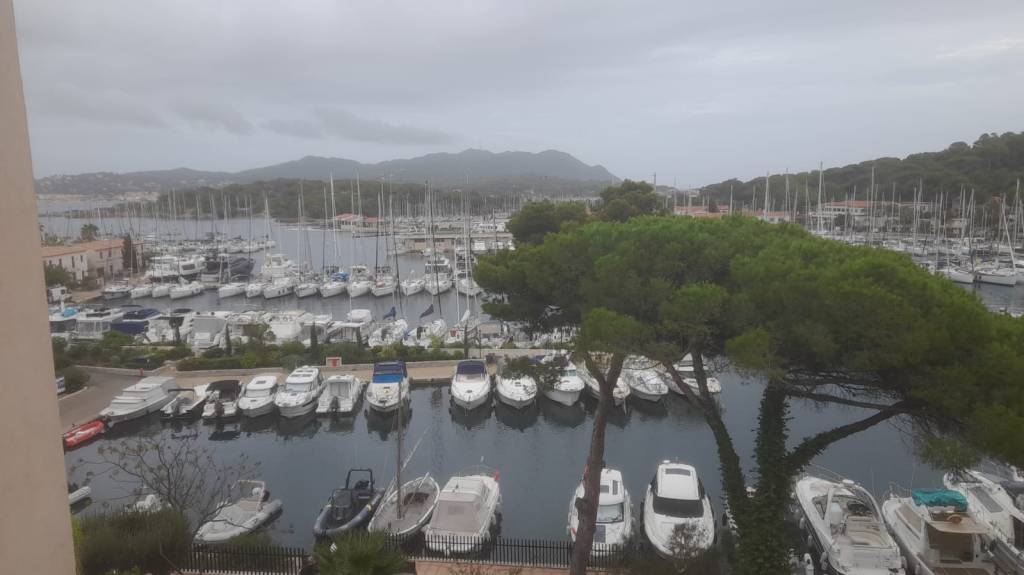
I think it’s really important that anyone even remotely on the same page as each other with regard to the role of Christianity and classical Western civilization work together and see past their differences to build up shields and swords against the forces of rabid secularism (and Islam). We rise and fall together to a great degree.
I am more than a bit skeptical of the liberal view of religious liberty – I am what would be called an “integralist” – but that doesn’t preclude ecumenical interventions and cooperation on large projects that create bulwarks against the most powerful and evil people around. Definitely not everything needs to be or should be ecumenical (let alone interreligious), but when that’s actually advantageous politically or economically then we should embrace it, not balk. Team-playing also creates opportunities for meaningful conversations about religious truth.
Sometimes ecumenical ventures are easier than projects among Catholics with slightly different opinions, projects, “circles.” Like two half-notes on a piano being played together – the dissonance is just too much. But we have to get over this. That division is of the Devil. It’s not from God.

We need to work together as far as possible. We need to be looking for ways to build up “the team,” even if it makes us uncomfortable or forces us to swallow our pride. We can’t be self-promoters, we must be “us”-promoters, freedom-promoters, and Christ-promoters.
A forgotten war…
A conversation I had yesterday evening led to a common agreement among participants that it’s a terrible shame just how much the world has forgotten that there is a war raging in Yemen. No problem to worry about Ukraine and its woes. Or Israel. But what about “where all that sand is”? There are people there too, with lives, families, and immortal souls.
Thankfully, a truce has been effective now for some time in keeping the violence minimal.
We should educate ourselves – and not just follow the crowd on the “cause du jour.” One must also wonder why some conflicts make the news, and others don’t. That’s the real question.
Off to France
Today I’m en route to France for a business networking event. So no long post. Instead, here is a joke I came up with a few months ago. It proves I have something like a sense of humor.
How many religious sisters does it take to screw in a light bulb?
…
…
…
…
…
Nun.
The main problem with the “mitigating factors” argument…
Some months ago I was in a Twitter feud (actually several) with an individual who has been something of a representative of the best there is in the world of lefty moral thought which is trying very hard to convince people just how orthodox it is to think that sometimes it is just so difficult to avoid committing adultery (after a divorce and attempted remarriage) that it might not be seriously sinful. (I’ve left Twitter for various reasons, so don’t bother looking. This despite having been followed shortly before my departure by the former co-host of what was at that point, back in 2020, for some time the most popular podcast in the world. Alas.)
We’re not talking about a case of severe cognitive impairment like schizophrenia or some other dissociative disorder that would render one minimally responsible or completely innocent, or some kind of extreme scenario involving physical violence (which would then arguably reduce to the former through inducing overwhelming fear or pain). We’re talking, “But I really like this man/woman and it would be really hard to leave him/her and really hard not to commit adultery, and/or I’m really afraid what he/she would do/not do to the children/me if I withheld myself, and it’s just too difficult to procure an annulment for some reason and rectify the situation.” Not over fractions of a second. Over weeks, years, decades.
The argument basically goes that because there are elements in the situation which make virtue difficult, such as social pressure, conditioning, anxiety, and similar factors. Therefore, the person is not entirely free to make a moral choice. (The hinge text for this argument is the CCC’s paragraph on self-abuse – #2352.)
One must either thus consign all of human agency to the whims of circumstances out of one’s control, which is to succumb to a kind of determinism which renders the will some kind of illusion, or one must accept that in fact real deliberation (or its seriously blameworthy absence) of itself suffices to provide the kind of freedom necessary for serious guilt in materially grave sins.
The Catholic answer is the latter. St. Thomas explains this in the ST I-II q. 77 a. 8:
Mortal sin, as stated above (I-II:72:5), consists in turning away from our last end which is God, which aversion pertains to the deliberating reason, whose function it is also to direct towards the end. Therefore that which is contrary to the last end can happen not to be a mortal sin, only when the deliberating reason is unable to come to the rescue, which is the case in sudden movements. Now when anyone proceeds from passion to a sinful act, or to a deliberate consent, this does not happen suddenly: and so the deliberating reason can come to the rescue here, since it can drive the passion away, or at least prevent it from having its effect, as stated above: wherefore if it does not come to the rescue, there is a mortal sin; and it is thus, as we see, that many murders and adulteries are committed through passion.
There is a lot to talk about with respect to Thomas’ treatment of the reason vis-a-vis external action (i.e. passions’ ability to forestall reason, the relationship between deliberation and the eternal types of the moral law, his treatment of sudden murders), but here we can simply point out that he has noted that both the “sin itself” (sinful act) and the “wanting to sin” (a deliberate consent) with regard to grave matter (i.e. murder, adultery) are only able not to be grave sins if the deliberating reason cannot come to the rescue and prevent the passion from having its full effect (which would be the case with someone who is insane). The passion (fear, desire, a mix of both) inclines one towards a certain action (such as adultery), and the reason will either repel the action (virtue) or not (grave sin) – certainly, over days, months, years, a sane person’s deliberating reason is being brought to bear upon their external actions.
In short, if you are able to think meaningfully about an action – which a sane person can certainly do if given days or even years to do so – then you are meaningfully responsible for choosing it.
My interlocutor was finally cornered on this and just refused to accept it. I then left him to his own counsel. There’s no point in arguing about this.
Sometimes we cut down trees we should have left alone, and they become our crosses. And those crosses are sometimes very large – but it puts the bearer in a position to go from a very bad place to a very good place extremely quickly, with the heroic courage required of them. We need pastors who will accompany people in making that hard, quick, large jump from death to life. We don’t need soothsayers telling people that it’s not all that serious if it’s difficult.
No amount of books, conference papers, journal articles, footnotes, or other texts can change this. It is the truth about human agency, and such truth is not subject to textual amendment.
Watch The Hong Konger!
Yesterday evening I was at the Rome premiere of a film worth your time to watch and pass along to friends. It was the second time I’d seen it… Definitely worth the rewatch. Perhaps a third will be in the cards as well.
Freedom isn’t free. It is within living memory that all of Europe was engulfed in war… These times can return just as easily as they left. It’s important we not take for granted our nearly unprecedent stretch of peace and prosperity in the West.
“China’s getting weaker.” Yes. Okay. But it’s not weak, and wounded animals are often much more dangerous.
-Eamonn
The Spirit of Lateran III
This morning I was perusing the canons of the early Roman ecumenical councils – Lateran I (1123), Lateran II (1139), and Lateran III (1179).
I live around the corner from the great basilica – I can see it from my roof very clearly. I went today for mass and confession. I can’t help but marvel how much times have changed.
Don’t get me wrong. The infamous Cadaver Synod was also held at the Lateran, as well as any number of unbelievably debauched parties (in the palace or basilica itself, I don’t know). But at least there was a certain kind of formality and seriousness to things… I just don’t know how we can be spending millions on the Synod on Synodality but can’t afford real candles for the railings by the high altar at the mother church of all Christendom.
The early Lateran councils are odd events. The first two were not so clearly ecumenical, at least for a long while. None of the first three even issue real teaching content – just laws. So, no, Vatican II was not the first ecumenical council like that (viz., definitive, infallible teachings by anathemas/teaching canons – obviously Vatican II issued teachings).
We don’t have the “acts” or proceedings of these councils. They might yet be discovered. It sometimes happens that things fall behind a shelf in the great archives of the Church and sit there – yes, even for centuries. And sometimes things just go missing… A friend who works with such things in the Vatican informed me not long ago that he can’t find the original copies of the proceedings of the canonization of St. Thomas Aquinas… It’s just gone. Poof.
Lateran III could hardly be clearer or more severe in its treatment of certain unnatural acts against the 6th commandment. See canon 11 for yourself. It was evidently pressing enough of an issue in 1179, this despite the Council coming near the end of almost 20 years of uncertainty and controversy about who was actually the Pope.
The concerns of these councils centered largely on ecclesiastical revenues (who gets money and how) and the right order of ecclesiastical governance. (Suffice it to say that it is not foreseen to have laity particularly involved with ecclesiastical administration.) There are also many concerns over peace.
Some legislation was very particular, such as Lateran I’s treatment of fraudulent exchange (canon 13): “Whoever knowingly makes or intentionally spends counterfeit money shall be separated from the communion of the faithful as one accursed, an oppressor of the poor and a disturber of the state.” Or, take Lateran II’s treatment of arson (canon 18): “We completely detest and forbid, by the authority of God and the blessed apostles Peter and Paul, that most dreadful, devastating and malicious crime of incendiarism. For this pernicious and inimical calamity surpasses all other kinds of destruction. Nobody is unaware of the extent to which it is injurious to the people of God and the damage it brings to souls and bodies. It is necessary, therefore, to oppose it and to labor with all one’s might, that so great a harm and danger be eradicated and suppressed for the sake of the people. If anyone, then, after the publication of this prohibition of ours, from some wicked design born of hate or vengeance, starts a fire or causes it to be started, or knowingly provides counsel or help to those starting one, let him be excommunicated. And when an arsonist dies, he is to be deprived of a Christian burial. Nor is he to be absolved unless, having first made reparation for the loss according to his means, he swears that he will never raise a fire again. Moreover, let him be given the penance of remaining a whole year in Jerusalem or Spain in the service of God.” Canon 19 continues, “If any archbishop or bishop relaxes this decree, he is to make restitution for the loss and abstain from his episcopal office for a year.”
Lateran II also contains an allusion to the famous rule of “sanctuary,” in canon 15: “In the same way we have decided to legislate that if anyone, at the instigation of the devil, incurs the guilt of the following sacrilege, that is, to lay violent hands on a cleric or a monk, he is to be subject to the bond of anathema; and let no bishop presume to absolve such a person unless he is in immediate danger of death, until he has been presented before the apostolic See and submits to its decision. We also prescribe that nobody dare to lay hands on those who flee to a church or cemetery. If anyone does this, let him be excommunicated.“
There’s so much more. Go learn what these councils said about pilgrims, crusaders, the Templars… and jousting.
The older ecumenical councils remain relevant. They cannot be forgotten. They are the greatest moments in the history of the Church’s life as a whole, in governance and teaching. They deserve our attention, our study, our serious consideration and reflection.
Even the obscure ones.
Happy Monday…
-Eamonn
 Christian Renaissance Movement