Is the Church Really in a Crisis?

Eamonn Clark

It has been said that the Church is in a crisis… Some have even said we are now in the “Fourth Great Crisis.” After all, it seems that about every 500 years the Church needs to face some massive doctrinal upheaval. First was Arius, next was the Great Schism of 1054 between East and West, then exactly 500 years ago was the Reformation. Aren’t we due? Isn’t the confusion over Amoris Laetitia the manifestation of a widespread sickness that has been plaguing the Church for some 50 years or more? We are facing serious novelties and ambiguities regarding the doctrine of grace, at least three sacraments, fundamental morals, the nature of the office of the papacy, and canon law. Indeed, there is a massive problem… But the Church is not in a crisis.

The Church is a crisis.

We, the Church on Earth, are no longer in Eden. This is the Bad News™ which makes sense of the Good News. We are caught in between the life of our corrupted nature and the life of Heaven, with the possibility but without the guarantee of making it to glory. The Church Militant is “militant” because of the continual working out of our salvation in fear and trembling… We must constantly fight against our weakened wills and darkened intellects. Either the battle is fought – with the help of God – or the battle is lost. If you are not fighting, you are dying… The one who stops fighting allows the Evil One to gain ground.

A city which is in a perpetual state of warfare would certainly be in nonstop crisis, but the Church Militant simply is the war itself on the part of the baptized. To be baptized is to have the power to fight for what the sacrament makes possible to obtain, namely, Heaven, and it makes one a special target of the Devil and the possible subject of a tragic fall into damnation. Therefore, the Church Militant is itself a war – or a crisis.

Yes, it is more than that. The Church is a communion of persons united with God through grace, it is the access to a supernatural storehouse of merit, it is the temporal participation in the Mystical Body of the Lord, and so on. But it is also essentially a dramatic fight for Heaven, where the Lord does battle with us and within us. Thus did Joshua enter Canaan, and so must we enter the true Holy Land. Our nature being what it is, however, there will be resistance to grace, and this will make a mess of what could have otherwise been an immediate victory – Joshua failed to purify the land of all its idols, which occasioned much trouble – and we have failed in much the same way. So long as there is sin within the Church, we have not yet succeeded, and this means that the war must continue.

There has always been widespread sin in the Church in every day and age. (Do you really think the pre-conciliar Church was that nice? Where, then, did the post-conciliar Church come from, I wonder?) However, there are moments where sin becomes more pronounced or more accepted as good among members of the baptized or even among the clergy. When this happens, it is something of a return to form… If you want to know how bad things can really get, reread the story of Our Lord’s Passion and Death, keeping in mind that the apostles are clergy – and one is the pope. (An attentive reading of 2 Kings 21 might also help – surely, you will have a legitimate complaint when your local bishop institutes the policies of Manasseh, King of Judah, and stays in power for 55 years.) Nonetheless, God made good on His promises then, and He will do so again. His own holiness and fidelity have the last word. He fights with us, and this is why the crisis – which is the Church in time – will not last forever. Until that day, let’s cultivate an eternal perspective on the failures of mere men who have a special office in Our Lord’s mystical body.

Let’s pray, too.

Incest – The Surprising Thomistic Objections

Eamonn Clark

*WARNING: Put on your Charity Goggles*

A disappointing article appeared recently in the Chicago Sun-Times entitled, “Archbishop not backing gay marriage – yet.” (See Phil Lawler’s commentary here.)

While one might argue there are several problems in the article, I want to focus on His Eminence’s explanation of consanguinity in marriage. I think he is off-base and risks coming across as a consequentialist.

The Angelic Doctor lists four reasons why consanguine marriage is illicit – and guess what? The risk of birth defects is not one of them. To me, it seems unlikely that Thomas was altogether ignorant of the likelihood of sickly kids coming from kissing cousins, but suppose he was… He is still against it, and with today’s rapid advances in genetic manipulation, the “problem” of incestuous birth defects could eventually be overcome. We should see the causal link between incest and sickness as a sign that something is wrong with the act, not as a random feature of an otherwise virtuous behavior. Thomas gives us a more principled account of why consanguinity (and affinity) is such a big deal.

With that, the four reasons are:

  1. Shame (in its proper sense) before one’s parents – and those closely united with them by blood and law – is good on account of the special respect owed to them on account of one’s special relationship with them.
  2. Families often live together, and this would provide an untold number of occasions to lust if there were not a clear, strong, and constant prohibition against incest.
  3. Inter-family marriage increases the social good of individual human beings, and in so doing it also builds up the community.
  4. We already have a natural inclination to love family members, and if this had the possibility of intercourse added to it then there would be an occasion for too great a sexual desire for that person.

So, for St. Thomas, it is about filial piety, intemperance in itself, and the good of the commonwealth, not scoliosis or clubfoot.

Again, it is not that birth defects are irrelevant to the discussion, but it is a symptom of the problem rather than the problem itself – and it is a symptom which theoretically could be eliminated. If we are to win the battle of the minds against secular culture, then we need to do better. Going back to Thomas is almost always a good idea, and I suggest that this is one of those moments. Incest is one of the last sins against chastity that Western society actually considers immoral… Let’s be sure not to lose that ground.

St. John the Baptist – pray for us.

Sola Scriptura: 7 Fatal Flaws of a Bleak Doctrine

Eamonn Clark

“Sola Scriptura” means “only Scripture,” as in “Scripture alone is the authority for Christian doctrine.” It is one of the foundations of Protestant theology… It rejects the teaching authority of the Church as such. Given that this day marks the dreadfully unhappy 500th Anniversary of the beginning of Protestantism, shall we examine this idea and expose it?

I submit that there are at least 7 massive problems with Sola Scriptura.

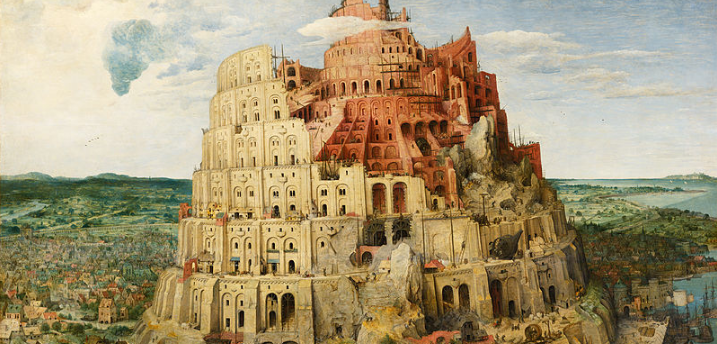
First: Sola Scriptura is anarchic. This is evident from the endless multiplication of divergent theologies and denominations within Protestantism. Without a unifying voice, namely, a bishop, pope, or something similar, one becomes his own definitive authority on the meaning of Scripture. Perhaps a pastor or teacher can help one form ideas, but it is I and I alone who am responsible for determining the true meaning of any given passage. Of course, I might say that the Holy Spirit is giving me the truth – which would mean that everyone must actually listen to me. In Protestantism, everyone is their own little pope. This same “bottom-up” approach to God existed once before, at the Tower of Babel. And there too did the languages multiply endlessly unto chaos, just as we see within Protestantism now, where there is splinter after splinter. Pentecost was the opposite – God came down to us (the Church as such, as represented by the Apostles and Mary in the Upper Room) and gave us a principle of unity from which to adapt to the many situations and needs of the day. Without a visible, living Pentecost among us, there can be no public unity around Christ. From the mere fact that there can be morally, liturgically, or doctrinally significant disagreement about the meaning of the same Biblical passage, it is evident that Scripture does not fit the bill of the “visible and living Pentecost”… Remember, the Devil knows Scripture too! (Mt. 4: 1-11) Unless one speaks about Scripture with the very authority of Christ, there is no end to disputation. As Peter says, interpreting Scripture can be very difficult and sometimes it ends badly, especially with Paul’s letters! (2 Pt. 3: 16) Would God really leave us orphans in this way? Did the Word really in practice just become more Words?

Second: Sola Scriptura is innovative. It did not exist until 500 years ago when Luther came up with it. Protestants often complain about “man-made traditions” infecting Christianity – well, Sola Scriptura is one of them. Would we not expect a Christian “God-made tradition” to have existed long before the 16th century? It sounds quite a bit like one of those “winds of doctrine” which Paul warned about (Eph. 4: 14). Of course, Scripture has been treated as authoritative throughout the ages, but it was not treated – or attempted to be treated – as the only authority until relatively recently. Did God let Sola Scriptura remain an obscure but correct practice and then even fall out of existence for centuries until Luther was inspired to revive it? This does not sound like the God of Christianity, does it… It sounds like a God Who did not remain among us but Who left us orphans instead – not only with no definitive interpreter of Scripture (see #1), but without the right doctrine about what Scripture is. And to think, He only left the children of Jacob in Egypt for 400 years…

Third: Sola Scriptura is historically impractical. This is not primarily due to illiteracy (though one might also wonder if that would be an impediment to being a good Protestant), it is due to the fact that for many years there simply was no such thing as Christian Scripture, let alone a collection of texts organized into “the Bible.” When Thomas the Apostle went to India, he did not bring with him the Gospel of Luke. When Peter went to Antioch, he did not bring Paul’s letters with him. When Matthew went to Alexandria, he did not bring the Johannine corpus with him. We can note that Paul in his missionary journeys, based on the whole Book of Acts and his own letters, is not using anything but Jewish Scripture in his disputations and preaching. How then could there be Christians in the wake of these evangelists? Doesn’t a Christian need a Bible? Obviously not. There were local churches set up in many places across the globe for a long time with little to no Christian Scriptures available, relying on the oral tradition and the authority of the Church as such, and it took even longer to form a real, authoritative canon (viz. “the Bible”) which allowed people to know what Scripture consisted of… Which brings us to the next problem.

Four: Sola Scriptura is conceptually impossible. We must know what actually is Scripture in order to use “Scripture alone,” yes? But how do we know what really counts and what doesn’t? The truth is that Scripture was defined by the Church, finally confirmed in a special way at the Council of Trent in response to the preaching and teaching of Luther, who wanted to throw out a few books which he didn’t think were really Scripture, but which most others did. Without descending into the minutiae of the history of the so-called “deuterocanon,” we can simply note that it was indeed widely regarded as Scripture from an early time, even though there was some controversy surrounding it. A Protestant response might be to fall back on the principle of St. Vincent of Lérins, that the faith is that “which has been believed everywhere, always, by all.” (Never mind that this was about faith in “the Catholic Church,” as Vincent says, nor that he only holds it out as a general rule for finding heresy rather than as a specific rule for formulating a biblical canon.) Universal acclamation of texts as Scriptural does not really work on its own… If there is a little disagreement, which there certainly was about non-deuterocanon, then one must begin to wonder, “How universal is universal enough?” There is no good answer. Instead, an authority must decide what is Scripture and what is not. Yes to 2 Peter, no to 1 Clement. Yes to Revelation, no to The Shepherd of Hermas. Etc. The New Testament itself does not and cannot provide a guide – nor does the New Testament provide a list of what belongs in the Old Testament. So the very existence of an authoritative canon which does not assemble itself or fall from the sky necessitates an authoritative compiler. That is the Church itself, which therefore must have its own special authority to speak for God. This guarantees the texts of Scripture are actually the ones which God inspired. (Let’s not even get into the bizarre and self-refuting theory that the Bible is a fallible collection of infallible texts…)

Five: Sola Scriptura is arbitrary. Of course, it makes sense that a revealed religion would involve a sacred text which has authority, but it is conceivable that it would not. And there is, therefore, no a priori need for “Scripture” as an authority at all, let alone as the sole authority. Let me be clear: I am not saying the Bible is not an authority, I am saying it is not clear that it automatically must be… And anyone who says that it is an authority has to appeal to something outside of Scripture. An appeal to Scripture to prove the authority of Scripture is perfectly circular. Why is Scripture an authority? Why not “Sola Papa” (the Pope Alone)? Why not “Sola Ego” (I Alone)? Why not “Sola Luther” (Luther Alone)? There must be an authority which supports Scripture as an authority, and that authority must derive from God. Seeing as Christ did not give us a biblical canon, He must have somehow given authority to mere human beings to decide what texts God actually inspired. In the end, men must cooperate in the governance of the Church, at least in this way. This brings us to problem #6…

Six: Sola Scriptura is self-contradictory. It is a teaching of Martin Luther, a mere man, and by those following him: also mere men. By obeying those who teach Sola Scriptura, the very doctrine is violated. To practice it on one’s own is also a violation, as one must listen to one’s own interpretation of passages (especially in cases of controversy), or one must say that the Holy Spirit is interpreting – Who is clearly not Scripture. And let us also note that Sola Scriptura is not taught by Scripture… So finally, we have the last and most problematic issue for the doctrine…

Seven: Sola Scriptura contradicts Scripture. The Bible does not teach Sola Scriptura, but it does teach the importance of the oral tradition which is not written down. Scripture also teaches the authority of the Church as such. Two verses will suffice. The first is 2 Thessalonians 2: 15 – “So then, brothers and sisters, stand firm and hold fast to the teachings we passed on to you, whether by word of mouth or by letter.” (Other translations render παραδόσεις “traditions” instead of “teachings.”) This is enough to show that at least Paul thought that more than Scripture might be necessary for safeguarding Christian doctrine. What might the mechanism be? He describes it in the second verse for our examination, 1 Timothy 3: 15 – “…if I am delayed, you will know how people ought to conduct themselves in God’s household, which is the church of the living God, the pillar and foundation of the truth.” How can “the church” be a “pillar” for the truth unless it functions as a means of connection to God, whereby false doctrines are corrected with good authority? The truth is tied at least to this pillar, “the church.” And how can it also be the “foundation” for truth unless it has a special means of holding up truth in a special way? What else could be the foundation of truth except that which is first in announcing it in the world? The guarantee of truth – infallibility – rests upon “the church.” God corrects error and announces truth through “the church.” This is how the Catholic Church understands its role in condemning heresies and defining doctrines (including what is Scripture and what is not).

There we have it… 7 fatal flaws with Sola Scriptura. Protestant readers (if there are any) might object with many verses of Scripture (especially 2 Timothy 3: 16, which simply insists that Scripture is indeed important – I do not deny this!)… However, in so doing they will no doubt demonstrate the points above.

You might consider sharing this post with any Protestant friends and see what they say. Tell them that no, God did not abandon us, leaving only a special book behind… That is a bleak doctrine indeed.

UPDATE (April 5, 2021): This post has become very popular, read many times every day – if you are reading, let me know how you found it! I always love to hear.

Main image: “The Tower of Babel,” Pieter Bruegel the Elder, 1563

Four Kinds of Problems with the Pan-Amazon Proposal on Married Priests

Eamonn Clark

The suggestion has been floated around in some quarters that at the newly announced Pan-Amazon Synod, to happen in 2019, bishops will discuss the possibility of ordaining married men in their region to the order of Priest. These “viri probati,” “proven men,” would make up for the absolute dearth of priests deep in the jungles of South America, where people are often deprived of the sacraments for long periods of time. There have been some missionary efforts there, but the terrain is vast and unfriendly, and the culture is extremely difficult to adapt to, so there has been limited success. It seems to some that simply ordaining certain men in isolated communities would help to make up for the absence of celibate priests in the area.

I note at least 4 categories of problems with the proposed solution. They are as follows:

  1. Canonical. The Code of Canon law, which binds the Latin Church (including, presumably, the men who might be ordained in the Amazon,) does allow for the possibility of married priests under certain circumstances (see c. 1047, §2, n. 3), but nowhere is the obligation to perfect and perpetual continence lifted for any cleric in the Code (though entering Orders – even the diaconate – without understanding or making the promise of continence means one cannot be obliged to its fulfillment). There has been much misunderstanding of the obligation to continence as distinct from the obligation of celibacy, and the widespread priestly ordination of married men in the Latin Church would make this worse. (On the other hand, it might finally get the mess canonically resolved.) For more on this confusing topic, see Dr. Ed Peter’s fine treatment here.
  2. Standard objections. There are many intrinsic problems with the idea of a married presbyterate. There are the economic problems, such as the time and energy a father and husband would have to spend between his family and the service of the community – or several communities, sometimes perhaps separated by miles of thick jungle, in this case. The resources needed to educate and train these priests adequately is an additional economic strain (and would likely never rise to the level of a normal priestly education), as is the payment of the priest who has to make enough income to provide for his family. There is the loss of the power of the witness of celibacy, which is a sign of contradiction to the spirit of the world, reminding people that there is a Heaven and a Hell, a death and a judgment, and that we had better start thinking about these things now if we are to be prepared for them later. There is also the impoverishment of the spirituality of the Latin priesthood as normally understood, which is spousal in nature and urges the priest toward greater charity for those in his care. In general, it seems that all the normal problems of a married priesthood obtain.
  3. Internal prudential. Not only will there likely be no comparison between the education and training of the Amazonian viri probati and a regular Latin priest, to the possibly very grave positive harm of the community (due to serious deficiencies in the confessional, in the pulpit, and so on), but the deeper problem causing the shortage is ignored. It is like a man who drinks to cure his depression – the feeling will go away for a while, but the underlying cause is never addressed. In the meantime, an addiction is developed which harms him positively and perpetuates the deeper problem, perhaps even worsening it. If there are no normal vocations to the priesthood, it is due to a lack of faith, a lack of zeal, a lack of something important in the local church. This ought to be the real object of discussion.
  4. External prudential. Once the Amazon has viri probati priests, who else will feel entitled? What other areas or countries will claim that they need this compromise? Meanwhile, as more concessions are made due to mounting pressure, the three foregoing sets of problems will perpetuate themselves.

The idea of a “simplex priest” may be what the bishops have in mind, a priest who does not do all of the public actions a priest with full faculties to preach and hear confessions would… But that comes with other problems, which will be addressed in a future post.

In summary, the bishops meeting at the Pan-Amazon Synod ought to think these things through quite carefully. I, for one, am unconvinced that it is a wise idea. But then again, I’ve only ever been to Amazon.com…

Capital Punishment and the Development of Doctrine

Eamonn Clark

Update: Dr. Feser presents a very similar argument here.

Currently, I am reading Dr. Ed Feser‘s recent book, By Man Shall His Blood Be Shed: A Catholic Defense of Capital Punishment (co-authored by Joseph Bessette). It was with great interest then that I read the Holy Father’s remarks on October 11 regarding the death penalty in a conference celebrating the 25th anniversary of the publication of the Catechism of the Catholic Church.

I do not wish to summarize the entire history of this topic within Catholic and Western thought, as any curious reader would profit much more by simply picking up Dr. Feser’s book, but instead, I want to address (briefly) the possibility of a “development of doctrine” which would say that capital punishment is intrinsically evil.

But first, let’s look at what the Holy Father actually said.

“[The death penalty] is in itself contrary to the Gospel.”

“However serious the crime committed may have been, the death penalty is inadmissible because it undermines the inviolability and dignity of the person.”

“We are not in the presence of some contradiction with the teaching of the past, because the defense of the dignity of human life from the first moment of conception until natural death has always been found in the teaching of the Church.”

“The harmonious development of doctrine, however, requires that we [now] leave out arguments which now appear decisively contrary to the new understanding of Christian truth.”

“Unfortunately, this extreme and inhumane remedy was also used in the Pontifical State, neglecting the primacy of mercy over justice. We assume responsibility for the past, and we recognize that those means were guided by a mentality more legalistic than Christian.”

This is a startling series of quotations, for several reasons.

First, the Holy Father, probably without realizing it, is accusing many of his real predecessors of using an “extreme and inhumane remedy,” thus “neglecting the primacy of mercy over justice,” which implies they “were guided by a mentality more legalistic than Christian.” This would, of course, include some popes who have been raised to the altars, even men such as the great St. Pius V. It is unlikely that the Holy Father really meant to condemn several saintly popes as impenitent murderers (or as hopelessly bad moralists suffering from invincible ignorance of their material sins), but that is the implication nonetheless.

Second, the Holy Father’s comments display a startling lack of awareness of the rehabilitative power of capital punishment. In fact, this is one of the traditional arguments put forth in favor of the death penalty: to know that one is about to die in a short while is a great help in coming to repentance. What else could focus a man’s mind more on the good of his soul? If imminent and certain death does not bring about repentance, we can be pretty sure that nothing will. Furthermore, while such criminals are locked up, how many more people might they kill, heaping even more sin onto their souls? For an example of the power the certainty of death has for occasioning conversion, one might look to the ministry of St. Joseph Cafasso, who turned several dozen men from hardened criminals petrified of death into virtuous souls equally resigned to live or die, sometimes hours before they were to be hanged… (St. Catherine of Siena and St. Vincent Palotti are other examples.) It was, in fact, the certain imminence of their deaths that softened them for the work of their chaplain-saint. Surely, they would have done much good in the world had they been set free, but then again, if such were done then there would no longer be a real threat of certain death in these cases (rendering the rehabilitation less likely), nor is this how justice works… It is unsuitable as a jurisprudential norm to allow men to walk free without facing their sentence simply because they appear to have become reformed (unless reform is conditionally a part of their sentence). Instead, converted inmates will make great citizens of the Kingdom which is not of this world – lest we forget, doing well in this life is not the ultimate point, as earthly life is not the greatest good. Human life is not entirely destroyed by bodily death. This must not be an afterthought in the discussion of capital punishment, as it is precisely the supernatural call to Beatitude which gives human life so much dignity even beyond our merely natural goodness as creatures.

Third, and most importantly, the Church has taught perennially, building upon the teaching of the Old Testament (in God’s own legislation) and the New Testament, and upon the timeless understanding of natural law that there is no injustice in a legitimate government administering capital punishment under certain circumstances, namely, the crime must really be proportionate with the penalty of death, and there is moral certitude (following due process) that this individual really committed such a crime. (We might also add other factors, such as avoiding doing more harm than good, or having suitable means of execution, but this will suffice for an exploration for now.) However, apparently, we now have “a new understanding of Christian truth” which can allow a development of doctrine that completely relegates capital punishment to the realm of intrinsic evils.

I suggest that this is absolutely impossible.

First of all, such a change would be abrupt. This is not how authentic developments occur, at least outside the context of an ecumenical council where a whole number of matters might be settled with uncharacteristic promptness. Rather, they naturally unfold over a long period of time. One might argue that the past two pontificates somewhat softened the attitude toward capital punishment, which is true, but 35 years is an unimpressive tenure for a doctrinal shift. A counterexample might be the teaching on lending at interest, which changed as slowly as its object changed (viz. the instrumental scope of currency). Another might be the Immaculate Conception, celebrated in the Church for centuries before slowly making its way into the universities for debate and finally, after several more centuries, onto the loggia of Bl. Pope Pius IX. More examples could be provided, especially in the field of bioethics. What makes an abupt change to be such a red flag is that the Church does not suddenly come up with ideas about doctrine; rather, the doctrine is there from the beginning and it is slowly unpacked by the faithful. This takes a long time.

With that, the second problem with this change would be that it finds no meaningful support in the Catholic moral tradition. As attentive readers of Prof. Feser’s book will see, the opposite is true – the Church teaches and has always taught that the death penalty is legitimate in principle because of its proportionality to certain crimes, among other reasons. This is especially true for St. Thomas, upon whose arguments much of the modern defense rests. What recent popes have done is little more than advise a restricted use of it, in keeping with their own prudential judgments about its efficacy and usefulness within a broader social context (and Cdl. Ratzinger reminded us that one may disagree with popes on this point). One might point out that the paragraphs in the Catechism which discuss the death penalty seem to insist on its use only when necessary for protecting others; while this is what the document says, (especially when it quotes Evangelium Vitae,) it does not discuss why on the level of principles of justice, only on the level of prudential judgments about “the common good” and how to be “more in conformity with the dignity of the human person” – presumably, only the person of the criminal… The dignity of the person or persons killed is not discussed, and such a counterweight must be included in such an examination of distributing proportionate punishment, as the CCC says in the paragraph immediately preceding. (See also the Roman Catechism on this point, issued by Pope St. Pius V and re-issued by Pope St. Pius X.) Also, for what it’s worth, John Paul II beatified a certain Pope Pius IX. Certainly, the former knew of the latter’s firm support and use of capital punishment…  We ought to conclude then, in keeping with the hermeneutic of continuity, that John Paul II meant only to advise such a use of capital punishment in accord with the teaching which preceded it – that capital punishment may be warranted even without the need for protecting others (which is not strictly denied by the CCC) – and thus it is only a prudential judgment about its use, rather than a denial of the justice of its use in circumstances which do not necessitate its use for the protection of others, that we find in EV and the CCC. (We should also remember that catechisms, while certainly important, are not infallible documents, as Cdl. Ratzinger himself pointed out after the CCC’s publication!)

The third and most important item to discuss is the obvious one: such a change would actually constitute a reversal of past teaching, despite the Holy Father’s words that this is untrue. The Church has certainly grown in its understanding of human dignity in various ways throughout the ages, but there can be no realization about human dignity that would render capital punishment illicit. This would theoretically be possible if the Church had never actually formulated a teaching in favor of capital punishment, instead merely tolerating its use without meaningful comment. But since this is not the case, there can be no such change. Some people might be confused by this… Let’s consider another example. Suppose Pope Benedict XVII in the year 2078 decides, “The Church has evolved in Her understanding of the dignity and power of Baptism to the point where we realize that there is really no need for Confession.” One might very easily map the words of Pope Francis onto the same idea of this fictional Benedict XVII – mercy, legalism, development, apology, etc. Since this is a development of the doctrine on Baptism, how could it contradict anything but past doctrines on Baptism? The reason is very simple: doctrines do not live in bubbles. They must fit together with all other authentic doctrines. If a new doctrine on Baptism implies a contradiction of the doctrine on Confession, then the new doctrine on Baptism is wrong. If a new doctrine on human dignity implies a contradiction of the doctrine on capital punishment, then the new doctrine on human dignity is wrong. We do have a doctrine on capital punishment, as Dr. Feser shows brilliantly in his book, and the attempt to raise human dignity to such a point as it becomes absolutely inviolable would indeed imply a contradiction of that doctrine and thus would be erroneous. It would also imply that God legislated immorality in the Old Testament (ex. Leviticus 20:10) and that St. Paul confirmed immorality in the New Testament (Romans 13:4).

It will be very interesting to see how all this unfolds, or if anything even happens at all.

It is perhaps more important than ever to be training dogmaticians and moralists… Let’s pray and fast, too.

Stay tuned… and be sure to subscribe!

Our Lady of Fatima, pray for us!

Main image: Portait of Pius V, pope; El Greco, c. 1600-1610 (oil on canvas)

Even More on Theological Censures

Eamonn Clark

Today’s post on censures, I am discovering in my private research, was a little bit lacking in precision and scope.

It could be labeled with several censures of its own, perhaps!

With that, I will provide a few additional distinctions and corrections (some of which have been added to the original post – email subscribers, I’m looking at you!), and some links for your perusal. My posts are certainly not exhaustive of this rather complicated subject. I encourage you to do your own research on this stuff and to get back to me and tell me my two posts are [insert Latin word here] and why.

Theological notes: a system of categorizing theological propositions according to their level of authority. Take a look at this useful chart, which also describes censures which might be fairly attached (and the sin which goes along with it, supposing sufficient knowledge and freedom in what one is doing). There ten notes, ranging from dogma to probable opinion.

Opinio tolerata: a tolerated opinion which is not probable (having significant evidence in favor of its truth). It could be called an eleventh theological note. Pious legends would come under this category, along with something like, “This was the veil of the Virgin Mary.”

De fide: There are three classes of de fide propositions. The first is de fide divina et ecclesiastica/Catholica (divine and ecclesiastical/Catholic faith), which is also simply and properly called “dogma.” Second is de fide ecclesiastica definita (definite ecclesiastical faith). The third is de fide divina (divine faith). The first kind of de fide proposition is that which is both revealed directly by God and has been solemnly declared as such by the Church. An example is, “Priests can confect the Eucharist.” The second category of de fide proposition, definite ecclesiastical faith, is a solemn declaration of the Church which, while infallible, is not dogmatic. In this case, God reveals through the Magisterium in a binding way without constituting a distinct item within the deposit of faith. One example is the sacramental efficacy of receiving Holy Communion under one species. Another, I suggest, would be the canonization of saints – a post is forthcoming on this interesting question. (For more on ecclesiastical faith, which is somewhat of a controverted topic, click here.) The third is what is revealed by God but not solemnly defined by the Church, often because there has been no significant controversy and therefore no need for such a definition. An example might be, “The Holy Spirit was present in a special way in the Upper Room at Pentecost.” The first two kinds of de fide propositions are matter for heresy. Contradicting immediately and directly (viz., without a mixture of any natural or derivative propositions) the first kind is heresy simply speaking, and with the second kind it is heresy against ecclesiastical faith. The third kind is matter for error in faith, as opposed to error in theology (which is simply a misapplication of certain principles – like the validity of the vernacular Novus Ordo).

De fide doctrines on morals: It seems difficult to speak about morals in a de fide way outside of the plain sense of the Ten Commandments due to their complexity and relation with natural truths. I would love to find some sources that explore this topic more in-depth.

Different lists of censures: There seems to be some differences between the old Catholic Encyclopedia’s enumeration and description of censures and Fr. Cartechini’s (the table of theological notes), even just regarding the teachings themselves (first category). Perhaps there is more than one way to skin a cat – or label a bad theological idea – which might depend on the purpose and resources of the body issuing the censures.

Maybe it is time to bring back these old distinctions and the discussions surrounding their particulars. Maybe it is time for the United States especially to have an operational Inquisition – that is, a canonical court specifically designed to investigate credible charges of heresy and error. The USCCB sort of has this in its Doctrine Committee, but maybe they could “turn up the volume.” The system we have now seems to provide too little too late.

Just some thoughts.


Heterodox Does Not Mean Heretical

Eamonn Clark

Update: See Dr. Ed Peters take on this issue (in a better way, taking up the issue of “refraining from proclaiming truth”) here.

In an earlier post I examined the beleaguered (and yes, still deserving of charity) Fr. James Martin, SJ’s denunciation of the rash use of the label “heretic,” together with some extremely suspicious Christology.

I actually agree with him regarding his claim that he is not a heretic (at least according to law, which involves outward signs revealing what is within the soul). This is with respect to his Christology and even with his homosexualist agenda. Nor does his shocking (but not quite totally direct) endorsement of apostasy rise to the level of “heresy,” I suggest. Of course, I also think these things are awful and deserve serious attention from the appropriate ecclesiastical authorities. Until such a time as those offices give that attention, and as long as “Martin Mania” continues, may I offer some selected thoughts on how to navigate this alarming controversy and propose the wide-spread resurgence of the use of a timeless treasure of the Church – hopefully in an “official” way?

Theological censures.

A theological censure is a kind of warning – or judgment – about a teaching or a written work. A local bishop, a special commission, a Roman congregation, or the pope himself might issue a censure. A censure says that a teaching or work is heterodox (at odds with the truth in any of a variety of ways) and/or dangerous to the moral life of those who might encounter it. Works that receive bad enough censures might be put on an index of forbidden literature, and teachings might be condemned in the form of a syllabus. Theological censures are still used today but not nearly as much as they used to be. While there is some danger with them (such as descending into incessant hair-splitting or losing a sense of theology’s purpose, such as was happening with the overuse of manuals), it seems an opportune moment to begin at least talking about popularizing this tool once more.

Suppose a Jesuit writes a book with imbalanced emphases, a bold assertion about rewording the Catechism, and generally scandalous phrases which tend to affirm sinners in their sin. What censures might be relevant?

There are three broad classes of censures which could possibly be placed on any work, or even propositions within a work. The first regards the importance of the teaching’s object itself, the second regards the mode of expression of that teaching, and the third regards the moral character of the teaching itself and its foreseen practical consequences for morals. (There is another means of categorizing censures, viz., according to the relevant “theological note”, but this is the simpler method and allows an easier way to admit the third category mentioned here.)

The first category is where we find the term “hæretica,” meaning “heretical.” It is the highest censure that can be placed on a teaching or work. A heretical teaching is one which directly and immediately contradicts a doctrine “de fide” (or dogma), a truth revealed by God which must be believed (“credenda”) with divine and Catholic faith. To say, “God is four Persons,” or “Christ had only a human nature,” or “the Eucharist is not substantially Christ,” or “the Commandments are impossible even for one in grace,” would be heretical. It is very, very difficult to earn this stamp of disapproval. The too frequent use of the word “heresy” is a bit like the casual use of bad language – it empties it of its power, and it should be discouraged. It is quite difficult to commit the sin of heresy, and it is even more difficult to commit the outward crime which can be judged by the Church publicly as such. The latter requires outward, explicit, and obstinate confession of a proposition directly contrary to a de fide truth/dogma.

Are there dogmas regarding morals? Yes. I contend it is dogmatically certain that murder is immoral, as it is expressly condemned in Scripture and denounced by the ordinary magisterium of the Church in an infallible way, that is, consistently and universally throughout the entire history of the Church. It would be heretical to support murder as such. On the other hand, it would be more difficult to say that the immorality of abortion is a dogma, as it is at least somewhat debatable that the ordinary magisterium has consistently and universally enough maintained that unborn life in all its stages is truly human and therefore inviolable. The naturally available truth of the humanity of the embryo, now completely evident, confirms that abortion does indeed constitute murder. But because we have to put these two truths together, one which is a dogma and one which is a natural truth related to it, to say abortion is immoral is not, in the strictest sense, heretical. One might put it in one of two categories: “erronea” (erroneous), supposing the humanity of the embryo is or was a sufficiently doubtfully applied natural truth, unlike an innocent adult (which, if taken away, would leave the 5th Commandment void of content altogether), or “hæresi proxima” (next to heresy or approaching heresy), if it is the case that one sees the humanity of the embryo as having been insufficiently doubtful to warrant the need for an additional truth on top of what is already implicitly contained in the Commandment. Either way, this is still a terrible label… To be in an error of faith, or to be next to heresy, should be frightening to the one putting forth the teaching, as it is still mortal sin. (Do take a look at the theological notes chart here, with more examples and explanations for all this.) Error regards things which still must be held (“tenenda”) by Catholics. The support of the legal recognition of same-sex unions as marriage would fall in one of these lower (but still binding) categories… It involves a dogma and a naturally available truth (called a “certa”), or it involves a truth immediately derived from the dogma which is “proxima fidei” (next to faith and commonly believed to be revealed, but without ever being the object of a formal enough definition). The dogma is that sacramental marriage is between a man and a woman, and the natural or derivative truth is that men are not women (and vice versa). Supporting homosexual marriage in law would be contradicting either a certa (mix of a truth from natural reason and a truth “de fide”) or to contradict the immediate derivative of the dogma itself. Heterodox? Yes. Heretical? No. (I tend to favor the label “erroneous,” but that’s too much to get into here.) And the vaguer the language becomes, the more difficult it is to levy a high censure rightly. To say something like, “There can be true love in a homosexual act,” is surely wrong in many ways, but it is vague enough to be far from deserving that worst of labels, “heresy.”

Returning to the example of abortion, the claim that so-called medical abortion or craniotomy (both of which destroy the child to save the mother) are licit procedures, given that such a condemnation is difficult to reconcile with the general affirmation of the morality of self-defense, could be called “errori proxima” (next to error): the contrary is able to be deduced from the right teaching on abortion. It would be “temeratia” (rash) to assert that the vast majority of abortions are only venial sins on the part of the mother due to the distress of the situation. In no way is this clear, as the natural truths involved are not at all available to the one who makes this claim (so one must wonder at the reasoning), and so this is also at odds with the common opinion of theologians.

Propositions which just seem like heresy or error but can’t quite be charged with the other offenses might be labeled “sapiens hæresi/errori” (smacking of heresy/error) or even “suspecta de hæresi/errori” (suspected of heresy/error).

There are other qualifying labels which might be added, according to what kind of truth is being contradicted (Scriptural, credal, moral, etc.), but this will do for our investigation of the first category.

The second regards the way a teaching is put forth. Even true teachings could be censured in this way. A proposition may be “ambigua” (ambiguous), for example, leaving itself wide open to bad interpretation. “Protestants should be welcomed into the Catholic Church,” might be an example… Surely, entrance into full communion should be done in a welcoming way, but we should not simply begin treating Protestants as part of the Catholic Church.

Statements might also be “captiosa” (captious), “male sonans” (evil-sounding), or, my favorite in this category, “piarum aurium offensiva” (offensive to pious ears). The first uses unobjectionable language to forward an objectionable agenda (“Priests might be allowed to marry one day.”) The second is when inappropriate words are used to express truths (use your imagination). The third simply shocks the sensibilities of Catholics, though it may well be true. (See my post on Jesus and the Aliens, which arguably comes under this category. I claim there that our sacramental economy could not incorporate extraterrestrial life because aliens are not descended from Adam. The short and “offensive” version is, “Jesus can’t save aliens.”)

The third category describes what a teaching does that is morally wrong or encourages that is morally wrong. They are rather self-explanatory. The category includes but is not limited to “subsannativa religionis” (derisive of religion), “decolorativa canodris ecclesiæ” (defacing the beauty of the Church), “subversia hierarchiæ” (subversive of the hierarchy), “arrogans” (arrogant), “scandelosa,” “perniciosa,” “periculosa in moribus” (scandalous, pernicious, dangerous to morals), which might include “blasphema” (leading to blasphemy), “magica” (leading to sorcery), “idolatra” (leading to idolatry), etc., etc.

Hopefully this will serve as a decent primer on this important and seemingly neglected area of Church governance and teaching.

What censures might some of Fr. James Martin, SJ’s countless articles, tweets, books, and speeches rightly be labeled with? Many, for sure, but that would be for the lawful authorities of the Church to determine and pronounce. Though I do not think that anything I have seen warrants that highest and worst label hæretica.

But that is surely nothing to brag about.

Comments are closed. See follow up here.


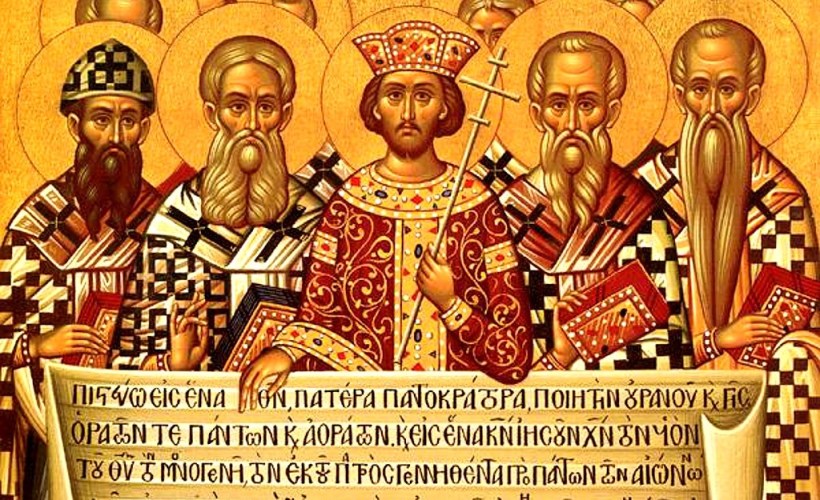
Main image: Detail of an icon of Nicaea I

In Defense of Bad Priests

Eamonn Clark

I recently prepared third graders for their First Holy Communion. Going through the story of the Last Supper several times, I noticed that they had a fascination with a certain Apostle… You guessed it – Judas. A fascination with such a character is understandable, as it seems rather out of place in a story which one would think is supposed to be exclusively upholding models of virtue. This is not unlike the very grown-up temptation to expect moral perfection from Catholic clergy. After all, they are supposed to be models of virtue, right?

Yes, they certainly are, and extra scrutiny is rightly deserved because we do indeed have the fullness of truth and grace available to us. But here are the facts. Our Lord chose losers, dummies, and wicked sinners as the foundation of His Church. Of the original Twelve, ten were ambitious cowards. One of those ten was also arrogant (Peter). The eleventh was just ambitious (John). And the twelfth one was a greedy traitor. (Later on He would also call a terrorist to this elite group.)

The place to start looking at the failure of any priesthood is a comparison with the first four failed priesthoods, and the first successful one: Adam, Aaron, Nadab, Abihu, and Melchizedek, respectively. (Others such as Abel and Noah and Abraham offered sacrifices, like priests, but they were not called by the name “priest.” More could be said about their sacrifices as well.)

Adam was the high priest of nature, called to guard and serve the Garden of Eden and his wife Eve at his own expense. He ought to have put himself in front of her and the serpent, but he shrinks away from his duty. He stands next to her (as Eve “turned to her husband” to give him the fruit) and watches this calamity take place. The serpent goes after Eve first, because he knows that she is easier to trick and that she might be able to trick her husband. When confronted by God, Eve blames the serpent, and Adam blames Eve: there is no responsibility taken.

The Devil often seeks to harm God’s priests through the very people they are called to protect. In this case, Adam’s own fear and self-interest allow his beloved to fall, and then she takes him with her – for what husband would want to have a wife estranged from him, as Eve surely would have been without Adam following her into sin? And yet they become estranged from each other anyway, needing to hide themselves with the flesh of animals… The first time blood is shed in Scripture, it is to cover up the sins of our first parents. A sign of things to come, for sure.

The next failed priesthood is Aaron’s. While Moses is busy with spiritual matters on Mount Sinai, the people grumble against him. The patience required to receive the Covenant is too spiritual for them, and so they threaten to leave the mountain in protest. Aaron is concerned about such a loss of numbers – he is afraid of what Moses will think. He has the people give him their gold, and he makes for them an idol which provides them with the experience of God they wanted: an unchallenging, unspiritual, ungodly experience. But the people are happy, and they stay put for a while, high on their own erroneous ideas about the worship of God. Aaron saved the day. When Moses returns with righteous fury, Aaron explains, like Adam did before God, that it was not his fault – it was the people’s and the furnace’s. More shirking of responsibility. (Moses gives them the proper experience of the god Aaron made for them when he ground it down, threw it in the water, and made the people drink. Like a good priest, he teaches them that a dead god gives even less life than water: it cannot save.)

Unlike Adam, Aaron’s ambitions were totally worldly. Instead of trying to become like God as a direct opponent, he simply wants to be the hero of God’s chosen people. Aaron wants just a little bit too much of their attention… He is not really after the gold, but what lies behind the gold – the esteem of men. That is what gives gold its value, after all.

Nadab and Abihu were Aaron’s sons. They violated the code of the Lord’s sanctuary by bringing unholy fire into the Tent of Meeting. This strange fire was deeply repugnant to the Lord, and so He slew them where they stood. Our Lord will only have sacred heat and light dwell within His holy place. Though profane fire may sustain bodily life, only sacred fire can sustain the life of grace.

The first successful priesthood is that of Melchizedek, whom Abraham meets after his battles. His is a totally spiritual and eternal priesthood, offering bread and wine and accepting the tithes owed to him for his work. He does not ask for money, he simply receives it. He is a priest not because of his family stock, like the Levites, but because of his charity. He gives to God first, then he receives what is rightfully his from men. He does not go looking for greatness: he simply is great.

Judas wraps up all of the failures of earlier priests in himself and makes them even worse. He is unwilling to do the work of a priest, putting himself in the place of Christ over and over again for the salvation of souls, standing in the way of the Devil’s reach of the weak, even though he would not have been alone in this task, unlike Adam. He trades the incarnate Lord not for the esteem of men, but for money itself. The purifying fires of the grace welling up in the Eucharistic Lord are traded for the fires of the foundry which purified the silver he would take as payment for his betrayal and would later throw into the Temple to try to buy back that grace. He takes into his body the blessed fruits of that very first celebration of Holy Mass which he was simultaneously endowed with the awesome power himself to perpetuate, as a recapitulation and elevation of Melchizedek’s priesthood, and then invites in the Devil to contradict it all. Though the accidents of bread and wine sustained Judas’ bodily life, the spirit within him died because of the rejection of the grace within the Lord’s Body and Blood – true food and true drink which preserve from everlasting death.

What greater human evil is there than the evil found in Judas on Holy Thursday? And yet that very night, Our Lord bowed before him to wash his feet, and He even personally called him “friend.” It is not unfair to say that, in a way, God loved Judas more than anyone else in human history, for there has never been a fouler human being to love. In the midst of this supreme wretchedness, Christ left us a memorial of His own greatness.

We know how the human story turns out. Judas despairs of the very mercy he was shortly supposed to be empowered to bring to others in the sacrament of confession. He attempts to slay himself (though perhaps did not succeed, and received even more time to repent), as if the death of the Lord had not been enough payment for his sin… No, Judas saw himself as so great that he believed his sin was unforgivable. “What a fool I have been,” he uttered. Yet this foolish failure brought about the culmination of our very redemption. Without Judas, there is no Passion, Death, or Resurrection. There is also not the greatest condescension of love ever shown by God. Deicide is not therefore justified, but God’s choice to allow a bad priest to exist in the Church is.

Meanwhile, Peter weeps in contrition and makes amends with “the man” he denied knowing, within earshot and within hours of having heard this prophesied. He left that “strange fire” in the courtyard, from where he watched the Lord shiver in the cold and dark of the prison cell, and he leaves the slave girl before whom he cowered in fear. Behold, the Prince of Apostles, who would eventually learn that taking up the sword is better left to those who persecute Christ than those who defend Him, and who would finally end his life as a willing victim upon a cross. The priesthood of Peter was in as sorry a state as the priesthood of Judas; the difference was repentance. Yet again, Our Lord shows his greatness through the failures of one of His hand-picked dispensers of grace.

The Church on Earth is institutional and hierarchical by nature, because human beings require such an order so as to avoid repeating the tragic error of the men of Babel who tried by their own powers to cooperate to reach up to Heaven. The Church on Earth is also sinful by nature, because it is populated by human beings – even in its hierarchy. It has been so from the moment of its inception, and this is by design. No, God does not want bad clergy in the same way He wants good clergy, but He does want to permit them to exist for now. He knew Judas would betray Him, and He knew all the clerical pedophiles, heretics, and antinomians of our own day would do the same. While they betray the Lord by selling Him for popularity or money, as they shrink from their duty to stand in front of Satan and then blame the weak or the natural insufficiency of their means, as they profane the Eucharist through indifference toward it, they repeatedly show the power of Christ in His Church: even through all this, there is victory waiting.

There has always been a crack in the foundation, there has always been chaff in the wheat, and yet there has always been grace available through these men nonetheless, as it is God’s own power which is the source of their priesthood and thus the source of their power to give grace – “ex opere operato.” God shows His majesty in the midst of this weakness and wretchedness. And sometimes He even brings these men out of their shameful disgrace and elevates them to the profoundest heights of sanctity, a feat which must be marveled at. There is true hope of Heaven for every bad priest in this world. Christ calls each of them “friend.”

Perspective is important. “There is nothing new under the sun,” as Qoheleth reminds us. We would do well to recall more frequently the beginnings of the Church to understand Her challenges today. (A reading of the disturbing history of ancient Israel would help too.) Whatever cleric is the object of concern – parish priest, celebrity priest, local bishop, curial official, pope… If there really is sin there, realize that it is just business as usual. The Barque of Peter has always leaked in the storm while the inept crew runs about helplessly, and yet it continues to float safely toward the harbor. Our Lord can guide it even in His sleep.

Let’s pray and fast for all priests, especially those who need it most.

Our Lady, Queen of the Clergy, pray for us!


Main image: Pope John XII, who was killed in the act of adultery by a vengeful husband

The Very Bad Christology of Fr. James Martin, S.J.

Eamonn Clark

UPDATE (4/12/18): There could be some subtlety added to this discussion, such as whether God could intentionally withhold some knowledge from the human nature of Christ for plausible deniability or a capability of identifying with humanity more. See here for a filmed, in-depth, and orthodox exploration of this topic. Most of the post still stands.

*Charity Goggles required*

No doubt most readers will be aware of the furor surrounding Jesuit Fr. James Martin’s latest book, Building a Bridge: How the Catholic Church and the LGBT Community Can Enter into a Relationship of Respect, Compassion, and Sensitivity. Since the issues with the book have been beaten to death – though not to a definitive conclusion – they will not be treated here. An item which has gone nearly undetected by comparison, though perhaps deserving much more treatment than his very bad book, is the very bad Christology which Fr. Martin has been publicly espousing recently.

This past Holy Week, Fr. Martin preached on the 7 Last Words of Christ prior to the Good Friday liturgy at the Cathedral of St. Matthew in Washington D.C. The Archdiocese reported as follows:

The sixth phrase, “It has ended; it is finished,” is usually interpreted by scholars to be the fulfillment of God’s will, said Father Martin, but he suggested that it can also be interpreted as a resignation, with Jesus saying, “I have done all I can do.” He may have wondered whether the apostles would carry on His work after He died, and be unsure if the great project of His ministry was coming to an end, Father Martin explained. But even if Jesus didn’t yet know how His project would continue, “The Father had other plans,” Father Martin said.

Further on:

Lastly, Jesus said, “Father, into your hands I commend my spirit.” Father Martin said his favorite theological question to think about is whether Jesus knew what was going to happen on Easter Sunday before He died. While the answer to the question is a mystery, “the one thing we do know,” said Father Martin, is “He desires only to do the Father’s will,” and in the Garden of Gethsemane, He reached the “ultimate decision point.”

Anyone who has read the Gospels will at this point be reaching for an explanation. Doesn’t Christ speak many, many times about His Resurrection and what will happen after He leaves the Apostles? Doesn’t He show He has foreknowledge in other instances as well? Yes, but it is not for no reason that Fr. Martin has taken his position. He has seen a true difficulty and is attempting to resolve it.

LifeSiteNews ran an article which originally commented on the content of the Good Friday talk (although it has since been edited). Fr. Martin decided to attempt to defend himself in the combox.

He is fully human. With a fully human consciousness. (Which means he would have had knowledge only of what a human person could know.) And fully divine. With a fully divine consciousness. (Which means he would have had the knowledge of the Father.) It’s a great mystery of how those two natures participated together. But to imply that I was denying his divinity is absurd. Feel free to read “Jesus” and “Seven Last Words.”

I don’t want to be too hard on Fr. Martin’s comment, as it was only in a combox, but there is a lot to investigate here. Why does he say “consciousness” and not “nature,” or “intellect,” or “hypostasis”? “Consciousness” is very vague and could lend itself to various interpretations. Also, why does Fr. Martin use the phrase “human person” and then make a contradistinction with “the Father”? Surely, he would admit that Christ is not a human person, but a Divine Person (the Son, not the Father) with a human nature, yes?

Now let’s add one more piece to this puzzle.

Fr. Martin recently took to Twitter (on August 20th, 2017) to explain the interaction between Christ and the Canaanite woman (Mt. 15: 21-28, Mk. 7: 24-29), which was the Gospel reading of the day:

Gospel: Today we see Jesus’ human and divine natures: he learns from the woman that his ministry extends to all, and he heals her daughter.

And then later that day, after receiving numerous rebukes from people who did not agree that Jesus learned about the scope of His salvific mission – the very purpose of His existence – from a mere creature, Fr. Martin responded with:

The most popular heresy in the Catholic Twitterverse is Docetism. It betrays a fundamental fear of any indication that Jesus was fully human

Seeing as Fr. Martin here uses the “h-word” as a defense against people who disagreed with his exegesis, do we not have the right to examine what he is saying in as serious a way as he treats the matter of an accusation of heresy?

But it was an exchange with Massimo Faggioli, a well-respected church historian, during which Mr. Douthat randomly tweeted “Own your heresy,” which sent things over the edge…

Calling [a theologian] a “heretic” is like calling a journalist a plagiarist.  These aren’t funny punchlines to be taken lightly.  They are attacks on one’s faith, and for theologians possible career-enders…

I’m disgusted with the facile use of words like “heresy” and “schism” and “apostate,” passing itself off as defenses of the faith.

All this from the same piece – and these are just some highlights.

Seeing as Fr. Martin is not tolerant of the lax use of these words, even in Twitter fights, shall we investigate what is at stake in his recent comments?

The Council of Ephesus proclaimed Mary as “theotokos,” or “God-bearer” – the Mother of God. This was defined against the doctrine associated with Nestorius (whose relationship with the doctrine is actually quite complicated), which was that Christ was both a human person and a Divine Person loosely united together. This meant that there are really two separate beings or “whos” in Christ: Jesus the human person, and the Person of the Son. Nestorianism was condemned again 20 years later at the Council of Chalcedon. In short, Nestorianism is definitely a heresy, and no Catholic can argue otherwise.

A view which splits Christ into two persons – not merely two natures – could account for several puzzling items. (After all, heresy usually makes matters simpler than they really are.) How is it, for instance, that a woman could really be “the mother of God” if Christ is fully human and is being born according to His humanity by which He is her son? Are His divinity and humanity the same? Of course not (although Eutyches, condemned at Chalcedon, tried something like that solution to this problem). Nestorius could easily explain this – Jesus the human person was born, God the Son was not, even though He was united with Jesus. A similar solution might be given to the problem of the death of Christ. How can God the Son die? The Nestorian answer is that, in every sense, He did not. There is no need for the complex subtleties of the communicatio idiomatum on this account.

Some kind of Nestorian Christology could also explain a strange verse in Scripture which is, frankly, very confusing and frequently misunderstood. It is Mark 13: 32, where Christ speaks of His return: “But of that day and hour no one knows, neither the angels of Heaven, nor the Son, but the Father alone.” (Matthew 24: 36 is identical, although many ancient Matthean manuscripts lack “nor the Son,” for what it’s worth.)

How to explain this? Certainly, we would not say that the Person of the Son does not know “the day nor the hour,” as He is God in the same sense the Father is God. Could the Gospel writers be suggesting that there are future contingent things that Jesus “the Son (of Man?)” just does not know as a human being and needs to learn, even if God the Son knows them as God? What else would account for this strange utterance of the Lord? Perhaps Fr. Martin’s comments are not so off-base…

Fortunately, this exact issue was settled a long, long time ago, in the year 600 A.D. to be precise. There had been folks – the “Agnoetae” – who picked up on exactly this verse and ran with it. They suggested that Jesus, in His humanity, did not possess the fullness of knowledge He possibly could, as if God the Son had held back some secrets. Pope St. Gregory the Great thought this to be problematic and weighed in on the matter (Denzinger 248). Shall we go through the text?

(But) concerning that which has been written: That neither the Son, nor the angels know the day and the hour [cf. Mark 13:32], indeed, your holiness has perceived rightly, that since it most certainly should be referred not to the same son according to that which is the head, but according to his body which we are . . . . He [Augustine] also says . . . that this can be understood of the same son, because omnipotent God sometimes speaks in a human way, as he said to Abraham: Now I know that thou fearest God [Gen. 22:12], not because God then knew that He was feared, but because at that time He caused Abraham to know that he feared God. For, just as we say a day is happy not because the day itself is happy, but because it makes us happy, so the omnipotent Son says He does not know the day which He causes not to be known, not because He himself is ignorant of it, but because He does not permit it to be known at all. Thus also the Father alone is said to know, because the Son (being) consubstantial with Him, on account of His nature, by which He is above the angels, has knowledge of that, of which the angels are unaware.

Gregory suggests that perhaps Christ is speaking figuratively, just as we figuratively attribute some characteristic to a thing on account of that thing causing that characteristic in us. His non-Scriptural example is a “happy day,” which is happy because it makes us happy. On this account, Christ “does not know” because he does not make us know. Christ attributes the knowledge to the Father, since God the Father does have the knowledge, but since God the Son is consubstantial with the Father, this would also mean God the Son has the knowledge. Basically, Christ is condescending to the disciples’ poor understanding of His nature – they don’t know him as God the Son, consubstantial with the Father. (cf. Mark 10: 18, Luke 18: 19 – “Why do you call me good? None is good but God alone.”)

 Thus, also, this can be the more precisely understood because the Only-begotten having been incarnate, and made perfect man for us, in His human nature indeed did know the day and the hour of judgment, but nevertheless He did not know this from His human nature. Therefore, that which in (nature) itself He knew, He did not know from that very (nature), because God-made-man knew the day and hour of the judgment through the power of His Godhead. . . . Thus, the knowledge which He did not have on account of the nature of His humanity – by reason of which, like the angels, He was a creature – this He denied that He, like the angels, who are creatures, had. Therefore (as) God and man He knows the day and the hour of judgment; but on this account, because God is man.

Here, Gregory gives a better explanation. He says that Christ knew “the day and the hour” in both His human and Divine natures, but He did not know from His human nature. This account would lead a reader (or listener) to understand that “the day and the hour” are not able to be known by natural inference. In other words, “flesh and blood will not reveal this to you” (cf. Mt. 16: 17). Also, as with the first explanation, Christ is speaking to the disciples according to their present understanding of His nature (and in this case His knowledge specifically) – they think He has a human knowledge derived from human learning, sometimes supplemented by Divine inspiration such as the prophets had. They do not yet have a full Christology – that must wait until Pentecost. Of course, we must be careful to avoid an implication of dishonesty in Christ’s words. Rather, He uses a rhetorical device which simply allows the truth to remain obscure.

Finally, we have a startlingly aggressive condemnation of Agnoetism from Gregory:

But the fact is certainly manifest that whoever is not a Nestorian, can in no wise be an Agnoeta. For with what purpose can he, who confesses that the Wisdom itself of God is incarnate say that there is anything which the Wisdom of God does not know? It is written: In the beginning was the Word, and the Word was with God, and the Word was God. . . . All things were made by him [John 1:13]. If all, without doubt also the day of judgment and the hour. Who, therefore, is so foolish as to presume to assert that the Word of the Father made that which He does not know? It is written also: Jesus knowing that the Father gave him all things into his hands [John 13:3]. If all things, surely both the day of judgment and the hour. Who, therefore, is so stupid as to say that the Son has received in His hands that of which He is unaware?

Gregory draws out an implicit Nestorianism in the Agnoetist doctrine. If there is really one being and Person, Jesus Christ, the incarnate Person of the Son, with two distinct natures united in that one subsistent being, then the knowledge of the Son must overflow into the knowledge of the human intellect due to the unity of subsistence which obtains. That knowledge would of course be gradually bestowed according to the natural capacity of the human faculties of Christ, which is why Luke can say, “And Jesus grew in wisdom and stature, and in favor with God and man.” (Luke 2: 52) As an infant, the human Jesus really did not know “the day and the hour,” but once His natural capacity to receive this knowledge grew, it immediately accessed that knowledge (cf. CCC #472).

The Catechism also has something to say about Agnoetism, though it does not condemn it by name (#473-474)… The letter from Pope St. Gregory the Great is also cited in the footnotes:

But at the same time, this truly human knowledge of God’s Son expressed the divine life of his person. “The human nature of God’s Son, not by itself but by its union with the Word, knew and showed forth in itself everything that pertains to God.” Such is first of all the case with the intimate and immediate knowledge that the Son of God made man has of his Father. The Son in his human knowledge also showed the divine penetration he had into the secret thoughts of human hearts. By its union to the divine wisdom in the person of the Word incarnate, Christ enjoyed in his human knowledge the fullness of understanding of the eternal plans he had come to reveal. What he admitted to not knowing in this area, he elsewhere declared himself not sent to reveal.

Here we have a fine summary of everything wrong with Fr. Martin’s Christology. There is clarity of language, first of all, and there is also an affirmation of the fullness of Christ’s human knowledge due to His human nature’s union to the Person of the Son. This human knowledge consists, then, not only in what a human being could know from experience and study. It also contains, as far as is possible for Christ’s human nature, all that God the Son knows, including the secrets of human hearts, the meaning and extent of His own visible mission (contra Fr. Martin’s exegesis of the interaction with the Canaanite woman), all that pertains to the truth of God and His laws and His Scriptures, the “day and the hour” (contra the original application of Agnoetism), that He would rise from the dead and successfully send out the Apostles (contra Fr. Martin’s Good Friday sermon), and all other future contingent events. While a Jesus who walks by faith and not by sight is more relatable, that is not the Christ of reality.

What can we say of our Jesuit? I too, like Fr. Martin, am concerned with the rash use of words like “heresy.” (I suggest that a general resurgence in the use of the classical terminology of theological censures is appropriate, and I will apply some of that language here.) In the strictest sense, Agnoetism seems not to be heretical (hæretica), as it does not immediately contradict a divinely revealed and defined dogma (like Nestorianism itself does), but it is erroneous (erronea) or next to error (errori proxima), as the truth it contradicts is immediately or at least eventually deduced from a defined dogma (contra Nestorius) and a certainly known natural truth (that Christ’s unglorified human nature was capable of knowing “the day and the hour,” and such like particular things). An Agnoetist must either deny what is clear from the dogma defined against Nestorius, or he must deny the natural truth about the possibility of Christ’s human knowledge. For this reason, it is not strictly appropriate to call an Agnoetist a heretic, even though it is difficult to conceive that what is being denied is the naturally certain truth. (Gregory of course thought Nestorianism was much more likely to be the root.)

I do think, however, that Fr. Martin has made it clear that he is indeed an Agnoetist.

I would certainly welcome a response from him denying this accusation and explaining his position with more clarity than he has done in the texts I have quoted.

We need to pray for our high-profile priests. Clerics who gain fame live a constant high-wire act even more than the average parish priest. If the downfall of Fr. Corapi has any lesson for celebrity priests, of whom Fr. Martin is the contemporary paradigmatic example, it is this: a priestly ministry which is more about conferences, books, and special events than it is about the sacraments and other characteristically priestly acts is in big trouble. Recall then-Father Corapi’s very sad words when he announced he would be leaving priestly ministry…

I didn’t do very much of that [sacramental work] quite honestly in the twenty years that I did minister . . . 90 percent of what I did in the past did not require ordination. Speaking through social communication—radio, TV, so forth—that’s not ministry, strictly speaking. My particular mission was speaking, writing, and teaching—not so much in the sacraments, but outside of them, in conjunction with them. So what I’m going to be doing in the future is pretty much the same thing.

I do not know if these words ring true with Fr. Martin, but I do sincerely hope he goes “back to basics” to avoid a similarly disastrous end. That might mean sacrificing some of the limelight – or all of it.

Comments are closed.


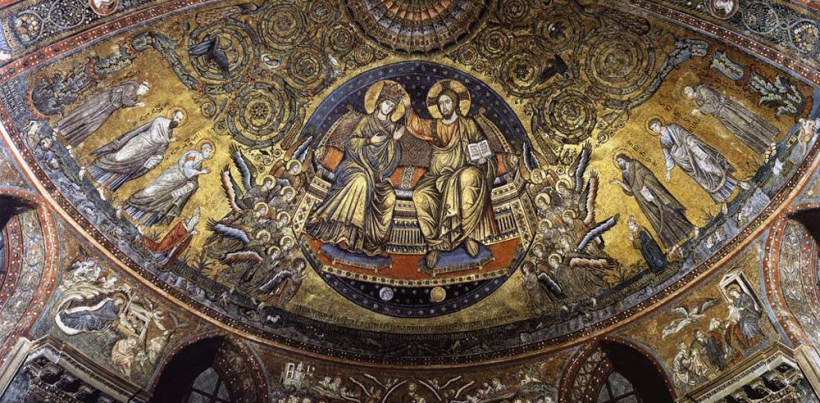
Main image: a fresco in Santa Maria Maggiore (Rome), a papal basilica built in honor of the Council of Ephesus (source: https://www.touritalynow.com/italy-travel-guide/rome/basilica-di-santa-maria-maggiore)

On the Fernández Document: PART III

Eamonn Clark

PART I, PART II

THE LEGITIMACY OF A CHANGE IN DISCIPLINE

Is this change possible and acceptable? Can Francis accept what was taught by St. John Paul II and yet open a door that was closed? Yes, because an evolution in the Church’s understanding of her own doctrine and its disciplinary consequences is possible. Let us look at some historical examples.

Rather, because the pope is the supreme legislator of the Church, he can write and interpret ecclesiastical law authoritatively, so long as it does not contradict Divine law – or, presumably, other existing ecclesiastical law. To date, Pope Francis does not seem to have done either with respect to c. 915 or c. 916 as it relates to the divorced and remarried beyond stating what has always been taught, albeit in a way that is open to other interpretations – yet continuity and custom are also relevant for understanding law (c. 20, c. 21, c. 27, etc.), and so long as it is not clear that the law or its authoritative interpretation has changed, there should be no change in the application of that law except to bring practice more in line with the law itself.

In 1832, Pope Gregory XVI, in Mirari vos, had said that it is an “absurd and erroneous doctrine, or rather delirium, that freedom of conscience is to be claimed and defended for all men” (MV 15). In the Syllabus of Pius IX (1864) religious freedom is condemned as one of the principal “errors.” But in the following century, the Second Vatican Council substantially modified these very firm ideas (cf. DH 2-3). A similar evolution occurred on the issue of the possibility of salvation outside of the Catholic Church. We recall also the case of slavery: Pope Nicholas V allowed the king of Portugal to take slaves. Then, in 1455 the Bull Romanus Pontifex reaffirmed this. And this is not a secondary issue, since it has to do with the inalienable dignity of the human person. (With respect to this subject of the evolution in the understanding of the doctrine, the examples can be taken into account which are given in: Thomas Rausch, “Doctrine at the service of the pastoral mission of the Church,” La Civiltà Cattolica, v. 3981, May 14, 2016; pp. 223-236.) As of those changes in the understanding of doctrine, there were, as a consequence, various changes in discipline.

This is not the place to launch into an extensive investigation of slavery or soteriology, but the Archbishop’s confidence in these examples as analogies is unwarranted. Chattel slavery, the intrinsically evil institution within the very broad term “slavery”, has never been taught as moral by the Church (nor is it taught as moral in Scripture), so there has been no development of doctrine here. The development on “extra ecclesiam nulla salus” was with respect to the scope of the Church itself, not with respect to its necessity for salvation.

However, some hold that these comparisons are not convincing, and insist that any evolution should be carried out in the same line as what was said previously by the Church. It would be a kind of magisterial “fixism.” But, precisely in the examples mentioned above, it can be seen that the evolution did not take place “in the same line” as before, at least not on the question in itself. Between allowing slavery and not allowing it in any case, there is an immense evolution. There is only Continuity in the general doctrine about human dignity, but not in the precise point in question, where the Church really evolved in its understanding. In the same way, between affirming that only a Catholic can be saved and holding that there is a possibility of salvation outside the Church, there is no continuity with regard to the question in itself. It is obvious that the Church grows into a better reception of the proposal of the Gospel, in a more complete vision and in new ways of applying what has been taught. But some have an enormous difficulty in admitting that something similar can occur in questions related to sexuality.

The Archbishop insists on his examples as good ones, though he is apparently aware that some disagree. It is in no way clear how his exposition of these matters would not constitute an about face in doctrine, an act which would undermine the Church’s very authority to teach without error. For example, if the Church really taught that there is no salvation outside the Church, then taught that there is, we are left with two possibilities: either the Church does not possess the guarantee of truth in definitively teaching on matters of faith and morals, or there are multiple truths which may contradict each other. Neither of these conclusions is admissible.

RECENT CHANGES OF DISCIPLINE REGARDING NEW UNIONS

The fact is that even in the praxis related to the disciplinary treatment given to the divorced in a new union, there have already been major changes over the last century. Let us recall that, with the same arguments with which it is not accepted that they may not receive communion, a long time ago “the prohibition against funerals and any public funeral service” was also applied to them (Francisco Elizari, Pastoral de los divorciados [Pastoral Care of the Divorced], Oxford: Oxford University Press, pp. 31-32.). This changed without all the beliefs that supported that praxis falling away.

The Archbishop apparently does not realize that this penalty may still be applied, if it seems prudent to do so. See Dr. Ed Peter’s post on this matter for more: HERE

Based on reasons that remain standing, the previous Code of Canon Law (1917) sustained a discipline which the current Code (1983) does not maintain: “If, spurning the admonition of the Ordinary, they stay in the illicit relationship, they are to be excommunicated according to the gravity of the deed or struck with personal interdict” (Canon 2336). This indicates the possibility of changes in the disciplinary practice that do not necessarily make the great beliefs that supported the previous praxis fall away, but the possible practical consequences of the general norm are considered in another way.

This is also incorrect, if the Archbishop means to say that under the Pio-Benedictine Code those who divorced and remarried incurred the penalty of excommunication simply by the act itself. See the same article linked to in the previous paragraph for more details.

Amoris Laetitia gives rise to a new change, which does not imply a contradiction with the previous teaching, but a harmonious evolution and a creative continuity. The prestigious philosopher and specialist in the thought of St. John Paul II – Rocco Buttiglione – has explained it very well:

“John Paul II, however, does not want at all to nullify the role of the subjective conscience. The objective aspect of the act determines the goodness and the seriousness of the act. The subjective aspect of the action determines the level of responsibility of the agent … Pope Francis sets himself on the ground, not of the justification of the act, but of the subjective attenuating circumstances that diminish the agent’s responsibility. This is precisely the balance of Catholic ethics and distinguishes the realistic ethics of St. John Paul II from the objectivistic ethics of some of Pope Francis’s opponents. … Familiaris Consortio, moreover, when it formulates the rule, does not tell us that it does not tolerate exceptions for a proportionate reason. The rule that no one who is not in grace God ought to receive Eucharist by its very nature does not tolerate exceptions. Whoever receives the Body and the Blood of Christ unworthily eats and drinks his own condemnation. The rule according to which persons in God’s grace are excluded from communion as the canonical penalty for the counter-witness which they have given, however, may be subject to exceptions, and this is exactly what Amoris Laetitia tells us.” (Rocco Buttiglione, L’Approccio Antropologico di San Giovanni Paolo II e quello Pastorale di Papa Francesco [The Anthropological Approach of St. John Paul II and Pastoral Care of Pope Francis])

By now the same point has been made a number of times, namely, that a person committing adulterous acts may not be gravely culpable for those acts which are themselves grave matter. However, this does not respond to the difficulty with public reception (c. 915), nor to the difficulty of a habitual intention to continue such behavior, an intention which is separate from the acts themselves, which is far less easily mitigated in culpability. 

It would be fitting to clarify Buttiglione’s expression “for the counter-witness they have given” by saying: “because their situation does not objectively correspond with the good that the general norm proposes.”

Indeed, a counter-witness really is given, as general norms do more than propose: they oblige.

RECOGNITION OF LIMITS AND GOOD THAT IS POSSIBLE

Once again, we may say that this does not imply watering down an objective value. What Francis suggests is the situation of a person who, in dialogue with the pastor, does not present the intimate acts of a more uxorio cohabitation as subjectively moral, that is to say, as the object of a personal choice that legitimates them. It only presents them as difficult to avoid in their concrete circumstances, even if they are sincerely willing to grow in this point. Circumstances can diminish culpability, but not transform an act, immoral by virtue of its object, into an act that one may justifies as a choice. In fact, the same Amoris Laetitia, rejects the attitude of someone who “flaunts an objective sin as if it were part of the Christian ideal” (AL 297). Therefore, it is clear that Francis does not admit that that act is justifiable as a “personal choice”.

The Archbishop does speak correctly here, but whether he keeps this line throughout the whole document is questionable.

Amoris Laetitia refers to people aware of the severity of their situation, but with “great difficulty of going back without feeling in conscience that one would fall into new sins” (AL 298). That culpability is diminished, because the capacity for a decision is strongly conditioned, does not mean presenting one’s situation as a personal plan consistent with the Gospel. That is why discernment is not closed, but “is dynamic; it must remain ever open to new stages of growth and to new decisions which can enable the ideal to be more fully realized” (AL 303). This, according to an authentic understanding of the “law of gradualness” (AL 295), invites us to respond better to God each time by trusting in the help of His grace.

Finally, there is an indication that a couple in an irregular union is called to grow toward the norm. This is good.

If the act remains objectively immoral and does not lose its objective gravity, then it is not possible that it can be “chosen” with conviction, as if it were part of the Christian ideal. Still less could it be held that, by this “choice of life”, it becomes subjectively moral. It is another very different thing is to propose, as Francis does, that in a context of attenuated culpability one seeks to respond to the will of God with a greater commitment, possible in the context of that situation. For example, with a greater generosity towards the children, or with the decision to assume as a couple a more intense commitment for the common good, or with a maturation in familial dialogue, or with the development of mutual gestures of more frequent and intense charity, etc. These attempts can be objects of a “personal choice”, and they are examples of that “possible good” that can be realized within the limits of the situation itself (cf. EG 44-45, AL 308). They are expressions of the “via caritatis“, to which “those who have difficulties in living God’s law to the full” (AL 306) can always turn. Staying on this path, conscience is also called to recognize “what for now is the most generous response which can be given to God … the commitment which God himself is asking amid the concrete complexity of one’s limits” (AL 303).

In this paragraph the Archbishop returns to an apparent contradiction of Trent on the possibility of following the Commandments (and/or the connected doctrine on sufficient grace). And surely, the Archbishop is not suggesting that the adulterous acts themselves could constitute “expressions of the ‘via caritatis’” or are “what for now is the most generous response which can be given to God … the commitment which God himself is asking amid the concrete complexity of one’s limits,” although this could easily be taken away from this passage of the article or from the quoted paragraph of Amoris Laetitia.

It is not that everything is the same, or that now “nothing matters”. The need to avoid concealing the seriousness of the situation explains why the Pope sets some firm limits on the proposed discernment. For example, it excludes the case of “a new union arising from a recent divorce” or “the case of someone who has consistently failed in his obligations to the family” (AL 298). At the same time, he asks that people be guided so that they may sincerely recognize their own truth, especially in relation to “how they acted towards their children” or with the abandoned spouse (cf. AL 300). There are limits that discernment should not exceed, particularly when the recognition of the other is at stake, or when there is still little clarity about the situation itself. The Gospel is not reduced, let alone its demands of charity, but it is incarnated in the concrete possibilities of human complexity.

Let it be noted that the conditions laid down for the “proposed discernment” (of one’s culpability for current adulterous acts, presumably) do not constitute anything other than vague suggestions of how to discuss these difficult situations.

CONSCIENCE

In the discussions about Amoris Laetitia, some hold that the Pope claims to grant to people’s conscience a power to create the truth and the norms at its whim. With this argument, these opponents of Francis try to force others to assume a determinate logic, from which there is no way out. The Gospel is thus subjected to a kind of theological and moral mathematics. Once that mental structure is adopted, there is no choice but to accept all the logic and consequences of that manner of using reason. It is a death-trap.

One must wonder what this “determinate logic” actually consists of. The Archbishop does not say, though surely he would grant that the rigorous application of immemorial laws as they have been authentically interpreted would be a good thing for the Church and Her faithful, no?

It is not the logic that Francis proposes for the shepherds of this time (cf. AL 296. 312). In addition, he rejects the pretension of “those who long for a monolithic body of doctrine guarded by all and leaving no room for nuance” (EG 40). He recognizes the value of reason to reflect on the Gospel, and appreciates the dialogue between faith and reason. But this does not imply canonizing “a” reason, a determinate manner of reasoning, a philosophy to which the Gospel and the whole Church must submit. The Gospel is not enclosed in a philosophy because “Christian morality is not a form of stoicism, or self-denial, or merely a practical philosophy or a catalogue of sins and faults” (EG 39).

Again, because the Archbishop does not detail the line of reason he critiques, one is left to speculate. However, his assertion that the Gospel and the whole Church need not submit to any philosophy is at least open to some criticism, given the condemnation of many kinds of philosophical worldviews which do not allow for the Gospel as the Church understands it. There are philosophies which allow for the Gospel, and there are philosophies which do not. The Archbishop fails to describe how the “determinate logic” does not allow for the Gospel in the way Modernism, Relativism, or Nihilism do not allow for the Gospel. What seems especially important to affirm in this discussion is that we can in fact know the truth of what is right and wrong, and we are in fact free in proportion with our capacity for reason. If the Gospel does not “submit” to this, then it must at least co-exist with it.

If a determinate manner of using reason is absolutized, only those who possess this mental structure will be able to interpret doctrine and revelation, and they would place themselves even above the pope. The supernatural vision of the Church and the Petrine ministry would thus be lost. Someone has said that this is an “intellectual Pelagianism”, because a determinate reason occupies the place of the Gospel and of the action of the Spirit in his Church. The Scriptures would serve only to illustrate the logic proper to “that” reason, administered by an oligarchic group of ethicists.

Surely, the Church is not called to stone the adulteress – but She is indeed called to tell her to sin no more. (John 8: 1-11)

Anyway, let us remember what Francis says about the importance of conscience; for example, in the following texts:

We also find it hard to make room for the consciences of the faithful, who very often respond as best they can to the Gospel amid their limitations, and are capable of carrying out their own discernment in complex situations. We have been called to form consciences, not to replace them (AL 37).

…Individual conscience needs to be better incorporated into the Church’s praxis in certain situations which do not objectively embody our understanding of marriage (AL 303).

This is all true, but announcing the truth to which a conscience must conform is certainly distinct from replacing that conscience.

However, Francis does not indicate that the conscience of each member of the faithful should be left completely free to its own judgement. What he asks for is a process of discernment accompanied by a pastor. It is a “personal and pastoral” discernment (AL 300), which also takes very seriously “the teaching of the Church and the guidelines of the Bishop” (ibid.) and supposes a “properly formed” conscience (AL 302). It is not a conscience that pretends to create the truth as it pleases, or to adapt it to its desires. On the part of the pastor, it “never implies dimming the light of the fuller ideal, or proposing less than what Jesus offers to the human being”, nor “an undue reticence in proposing that ideal” (AL 307). Some priests may be questioned who tend to fall into irresponsible or hasty discretion, causing confusion. The Pope does not ignore these risks that must be avoided (cf. AL 300). Each local Church will find the right balance through the experience, dialogue and guidance of the Bishop.

The “irresponsible or hasty discretion” which the Archbishop condemns, as the Church has always understood it, is a suggestion given to a person in an adulterous relationship living “more uxorio” to go to Holy Communion publicly. Suppose the divorced person shows up in the parish and finds his or her spouse according to ecclesiastical law going to Holy Communion publicly while civilly married to another person with whom there is reasonably presumed a “more uxorio” relationship. If this person approaches the pastor, what recourse does he have to Divine or ecclesiastical law? None. What terrible injustice, scandal, and pain has been caused in such a situation, with no spiritual advancement for anyone. The current law helps prevent such a tragedy (although people certainly can and do take their own initiative to receive illegally and hope for the best). Tribunals exist to discern whether a person can live “more uxorio” with a person other than the presumed spouse and then go to Holy Communion publicly – NOT individual priests or bishops or bishops’ conferences, especially through a judgment on the internal forum (see c. 130). The timeless wisdom of the Church on this matter should not be quickly set aside. “Do not move an ancient boundary stone…” (Proverbs 22:28, 23:10) To delegate these judgments in a way differently from how it is now (through the courts) would be a disaster. The best way to judge these cases is with a real system of courts who are not “interested” or “biased,” who are well educated, who have appropriate perspective of the whole situation, and who can effectively promulgate their decisions. A confessor cannot gather and weigh evidence in this manner, not all bishops are well-trained in canon law (and thus one might question the prudence of the “Briefer Process” outlined in Mitis Iudex Dominus Iesus), and pastors have the temptation to succor favor with their parishioners. Most dangerous of all would be the delegation of these decisions to the interested individuals themselves.

Francis’s proposal is very demanding. It would be easier or more convenient to apply norms in a rigid and universal way, to pretend that everything is “black and white” (AL 305), or to start with some general beliefs and draw fixed conclusions without taking into account the complexity of reality and the concrete life of persons. But this comfortable rigidity can be a betrayal of the heart of the Gospel: “At times we find it hard to make room for God’s unconditional love in our pastoral activity. We put so many conditions on mercy that we empty it of its concrete meaning and real significance. That is the worst way of watering down the Gospel.” (AL 311).

On the contrary, the traditional teaching and practice of the Church seem much more demanding both of doctors of souls and of those in irregular unions. This is why Our Lord’s words on divorce and remarriage startled the Apostles so much that they exclaimed, “In that case, it is better not to marry!” Our Lord did not disagree. (Matthew 19: 10-11) It is seriously doubtful that the places where this proposal is adopted as legitimate and is put into practice that chastity will actually be preached in any meaningful way. Rather, human nature will simply take over in the absence of a strict ecclesiastical law. We have to wake up and smell the concupiscence.

A SECONDARY QUESTION

Although the question of the possible access to the communion for some divorcees in a new union has caused much commotion, the Pope intended – unsuccessfully – that this move be made in a discreet manner. Therefore, after developing the presuppositions of this decision in the body of the document, the application to communion for the divorced in new union was made explicit in the footnotes.

Herein lies the proof that there has been no authentic interpretation of law, let alone a change in legislation. There can be no discreet authentic interpretation or legislation – these must be open and clear, like the reforms Pope Francis made for tribunal proceedings in Mitis Iudex.

This caution is explained by the fact that what Francis considers “central” are the chapters of Amoris Laetitia “devoted to love” (AL 6), where he proposes for us a beautiful task in order to stimulate “the growth, strengthening and deepening of conjugal and family love” (AL 89). He asks us to carry on “before anything else a pastoral care of the marriage bond, assisting couples not only to deepen their love but also to overcome problems and difficulties” (AL 211), a pastoral care that encourages communion, generous dedication, the bonds of tenderness and mutual belonging.

All well and good. Recall, however, that the Church understands “conjugal love” to exist only between validly married persons, not between non-spouses.

For, ultimately “marital love is not defended primarily by presenting indissolubility as a duty, or by repeating doctrine, but by helping it to grow ever stronger under the impulse of grace” (AL 134). It would be very good for us to work more intensely in this line, in the face of a world darkened by the comfortable and superficial individualism that weakens and destroys these bonds.

Who could disagree with these closing lines? And yet the article’s ubiquitous pessimism about both human nature and the help of the grace of the Sacrament of Holy Matrimony seems quite contradictory to the spirit of what the Archbishop ends with. If we want “to work more intensely in this line,” we must indeed present “indissolubility as a duty” and repeat doctrine to call people to account, as our culture and so many in the Church are falling into confusion on this critical part of human society.

————-

Some closing thoughts… In all of these theoretical back-and-forths, it can be easy to forget that behind it all there are indeed real people in truly difficult situations. We must indeed accompany them diligently and carefully, a theme this pontificate has routinely emphasized. But we must remember too that mercy is the removal of an affliction, and this may involve causing some pain. When serious sin becomes easy, comfortable, banal, and even feels like a duty, the sinner sits in such profound darkness that the light of Christ will necessarily hurt. This does not mean it ought to be hidden under a bushel basket, which is the idea one sometimes gets from the modern usage of the word “pastoral.”

We must carry the lost sheep gently, but where are we really carrying them: back to the fold, or to the jaws of the wolf? Let every person charged with the cure of souls recall those foreboding words which God said to Ezekiel: “If I say to the wicked, ‘You shall surely die,’ and you do not warn them or speak out to dissuade the wicked from their evil conduct in order to save their lives, then they shall die for their sin, but I will hold you responsible for their blood.” (Ezekiel 3:18)